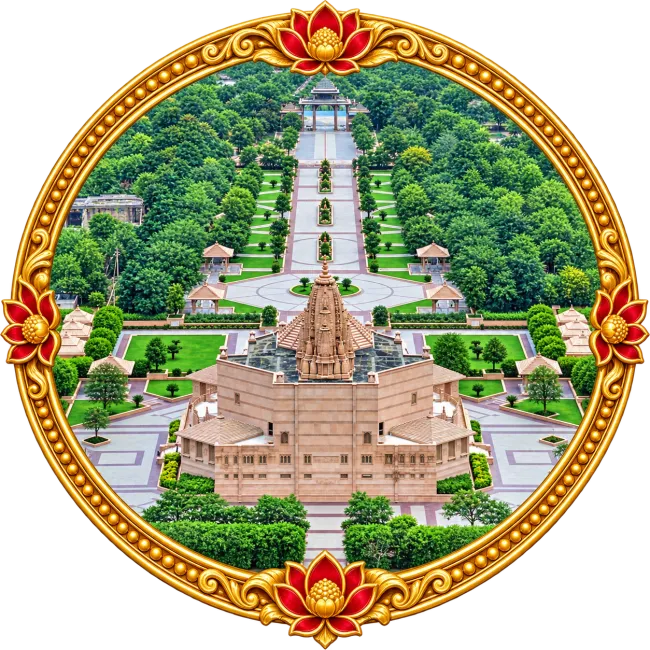
Nareli Jain Temple, Ajmer
Visit Nareli Jain Temple in Ajmer, a magnificent Digambar Jain pilgrimage complex known for its modern architecture, peaceful surroundings, monumental idol of Lord Adinath and 24 hilltop Jain temples representing the Tirthankaras. Also known as Shri Gyanodaya Tirth Kshetra, the temple combines traditional Jain design with contemporary architectural elements.
About Nareli Jain Temple
Nareli Jain Temple is situated in Nareli village on the outskirts of Ajmer, Rajasthan. Located beside the Ajmer–Jaipur highway and surrounded by the Aravalli Hills, the temple offers a peaceful spiritual environment away from the congestion of the city.
The temple belongs to the Digambar tradition of Jainism. Its principal deity is Lord Rishabhanatha, also known as Lord Adinath, the first of the 24 Jain Tirthankaras.
The complex consists of one large central temple at the base and 24 smaller Jinalayas arranged along the adjoining hill. These hilltop shrines represent the 24 Tirthankaras of Jainism.
Nareli Jain Temple is admired for its:
- 22-foot-tall idol of Lord Adinath
- 24 hilltop Jinalayas
- Modern and traditional architectural design
- Large prayer halls
- Peaceful Aravalli setting
- Digambar Jain rituals
- Manastambha and detailed carvings
- Dharamshala and Bhojanshala facilities
The temple attracts Jain pilgrims, architecture enthusiasts and travellers visiting Ajmer and Pushkar.
Other Names of Nareli Jain Temple
The temple is known by several names:
- Nareli Jain Temple
- Shri Gyanodaya Tirth Kshetra
- Nareli Gyanodaya Digambar Jain Temple
- Shri Digambar Jain Gyanodaya Tirth Kshetra
All these names refer to the same temple complex located in Nareli near Ajmer.
History of Nareli Jain Temple
Nareli Jain Temple is a modern pilgrimage centre whose construction began during the mid-1990s. The development of the temple is closely associated with Ashok Patni of the R.K. Marble family.
The project was undertaken under the spiritual guidance of Digambar Jain Muni Shri Sudha Sagar Ji Maharaj, a disciple of the renowned Jain Acharya Vidyasagar Ji Maharaj.
Construction started during 1994–1995. The plan was to create a major centre where devotees could worship, study Jain philosophy, practise meditation and learn the principles of non-violence, truth and spiritual discipline.
The central temple was developed near the base of the hill, while a sequence of smaller shrines was constructed along the elevated landscape. The positioning of these temples creates a striking visual arrangement against the Aravalli Hills.
As the complex expanded, accommodation, community dining and facilities for religious programmes were also developed. Nareli gradually became an important pilgrimage destination for followers of the Digambar Jain tradition.
Who Built Nareli Jain Temple and When?
The development of Nareli Jain Temple was initiated in the mid-1990s by Ashok Patni and the R.K. Marble family under the guidance of Muni Shri Sudha Sagar Ji Maharaj.
The main temple and surrounding Jinalayas were developed in stages as part of the larger pilgrimage complex.
Religious Significance
Nareli Jain Temple is dedicated primarily to Lord Adinath, the first Tirthankara of the present Jain time cycle. According to Jain tradition, Lord Adinath taught humanity essential skills, social organisation, ethical living and the path to spiritual liberation.
The word “Tirthankara” refers to an enlightened spiritual teacher who establishes a path for souls to cross the cycle of birth and death.
The temple encourages devotees to follow the fundamental principles of Jainism:
- Ahimsa—non-violence
- Satya—truthfulness
- Asteya—non-stealing
- Brahmacharya—control over desires
- Aparigraha—non-attachment
- Compassion towards all living beings
- Self-discipline
- Meditation and inner purification
Devotees visit Nareli Jain Temple to pray for peace, wisdom, self-control and progress on the path towards liberation.
Lord Adinath
Lord Adinath, also called Rishabhanatha, is the principal deity of Nareli Jain Temple. He is recognised as the first Tirthankara in Jainism.
His traditional symbol is a bull. He is depicted in a calm meditative posture, representing detachment, knowledge and complete control over the senses.
The monumental idol at Nareli is approximately 22 feet high and is shown seated in the Padmasana meditation posture. The idol’s peaceful expression and large scale create a powerful atmosphere within the temple.
Devotees meditate before Lord Adinath and pray for:
- Spiritual wisdom
- Freedom from attachment
- Control over anger and desire
- Mental peace
- Compassion for living beings
- Right knowledge and conduct
- Progress towards moksha
The 24 Hilltop Jinalayas
One of the most distinctive features of Nareli Jain Temple is the group of 24 smaller temples constructed along the hill.
Each Jinalaya represents one of Jainism’s 24 Tirthankaras:
- Lord Rishabhanatha
- Lord Ajitanatha
- Lord Sambhavanatha
- Lord Abhinandananatha
- Lord Sumatinatha
- Lord Padmaprabha
- Lord Suparshvanatha
- Lord Chandraprabha
- Lord Pushpadanta
- Lord Shitalanatha
- Lord Shreyansanatha
- Lord Vasupujya
- Lord Vimalanatha
- Lord Anantanatha
- Lord Dharmanatha
- Lord Shantinatha
- Lord Kunthunatha
- Lord Aranatha
- Lord Mallinatha
- Lord Munisuvratanatha
- Lord Naminatha
- Lord Neminatha
- Lord Parshvanatha
- Lord Mahavira
The uphill path provides devotees with an opportunity to worship the Tirthankaras while completing a spiritually meaningful walk.
Architecture of Nareli Jain Temple
Nareli Jain Temple is admired for its fusion of traditional Jain architecture and contemporary design. Its angular forms, marble surfaces, domes and hilltop layout give it a unique appearance.
Central Temple
The main temple is situated at the base of the hill. It contains the principal worship hall and the monumental idol of Lord Adinath.
The structure has tall pillars, symmetrical spaces, decorated ceilings and an elevated sanctum.
22-Foot Idol of Adinath
The large Padmasana idol is one of the complex’s principal attractions. It represents the meditative state, spiritual tranquillity and detachment taught by the Tirthankaras.
Manastambha
A Manastambha stands within the temple complex. This ceremonial pillar is commonly found at Jain temples and symbolises the surrender of pride and ego before entering a sacred space.
Hilltop Temple Arrangement
The 24 smaller temples are aligned across the natural slope of the Aravalli Hills. Their placement creates a striking silhouette and connects the religious structures with the surrounding landscape.
Marble and Stonework
White and light-coloured stone is extensively used throughout the complex. Carved pillars, railings, domes and decorative patterns demonstrate the refined craftsmanship associated with Jain architecture.
Traditional and Modern Design
The temple incorporates traditional features such as shikharas, domes, sanctums and carved pillars while also using modern geometric forms, wide halls and planned circulation routes.
Nareli Jain Temple Timings
The temple is open throughout the week. The regular worship schedule is:
The evening aarti follows sunset rather than one fixed clock time. Festival schedules may differ, and the programme displayed by the temple administration should be followed.
Best Time for Darshan
The best time for peaceful darshan is between 6:30 AM and 9:30 AM. Devotees can experience the quiet morning atmosphere and participate in the abhishek, puja and aarti.
The period between 4:30 PM and sunset is suitable for exploring the hilltop shrines. The softer light enhances the temple’s marble architecture and provides beautiful views of the surrounding hills.
October to March is the most comfortable season for visiting Ajmer. During summer, the hill path and stone surfaces can become extremely hot, so morning or evening visits are preferable.
Daily Puja and Aarti
Daily worship at Nareli Jain Temple follows Digambar Jain traditions. Rituals are performed with discipline, cleanliness and respect for non-violence.
The daily ceremonies include:
- Darshan of Lord Adinath
- Jal Abhishek
- Prakshal of the deity
- Ashtaprakari Puja
- Recitation of Jain mantras
- Morning Aarti
- Meditation and Swadhyaya
- Evening Aarti
The Navkar Mantra is one of the most important prayers recited by Jain devotees:
“Namo Arihantanam
Namo Siddhanam
Namo Ayariyanam
Namo Uvajjhayanam
Namo Loe Savva Sahunam.”
The mantra offers respect to enlightened souls, liberated beings, spiritual teachers and Jain monks.
Only eligible devotees following the temple’s rules may be permitted to participate directly in abhishek. Clean ritual clothing may be required.
Major Jain Festivals
Mahavir Jayanti
Mahavir Jayanti celebrates the birth of Lord Mahavira, the 24th Jain Tirthankara. Special puja, processions, religious discourses and community programmes are organised.
Paryushan Parva
Paryushan is one of Jainism’s most important periods of fasting, repentance, self-discipline and spiritual reflection.
Devotees attend religious discourses, practise meditation and seek forgiveness for their actions.
Das Lakshan Parva
Digambar Jains observe Das Lakshan Parva by reflecting upon ten spiritual virtues, including forgiveness, humility, truth, purity and non-attachment.
Akshaya Tritiya
Akshaya Tritiya has special importance in the life of Lord Adinath. According to Jain tradition, it commemorates the day he received sugarcane juice after a long period of fasting.
Diwali
In Jainism, Diwali commemorates the attainment of nirvana by Lord Mahavira. Lamps are lit to symbolise the light of spiritual knowledge.
Kartik Purnima
Jain devotees visit temples, perform prayers and participate in religious journeys on Kartik Purnima.
Offerings and Temple Customs
Jain worship differs from many Hindu temple traditions. Devotees may offer:
- Clean water for abhishek
- Rice
- Flowers according to temple rules
- Sandalwood paste
- Saffron
- Incense
- Lamps
- Donations
- Religious books
Edible prasad is generally not placed before Jain Tirthankara idols in the same manner as in many Hindu temples. Visitors should follow the instructions of the temple priests and management.
Food, leather products and items involving harm to living beings should not be carried into sacred areas.
Bhojanshala and Dharamshala
The temple complex may provide accommodation and meal facilities for pilgrims according to availability and religious rules.
Bhojanshala
The Bhojanshala serves strictly vegetarian Jain food. Meals may follow Jain dietary principles, including restrictions on root vegetables and fixed serving times.
Visitors should:
- Enquire about meal timings in advance.
- Purchase meal coupons if required.
- Avoid wasting food.
- Maintain silence and cleanliness.
- Follow the dining hall’s rules.
Dharamshala
Accommodation may be available for Jain pilgrims and families. Rooms are allotted according to availability and temple administration policies.
Advance arrangements are advisable during Mahavir Jayanti, Paryushan and major holidays.
Entry Fee and Visit Duration
There is no general entry fee for visiting Nareli Jain Temple.
Accommodation, meals, special puja arrangements and donations are handled separately.
How to Reach Nareli Jain Temple
Nareli Jain Temple is located approximately 8–10 kilometres from central Ajmer on the Ajmer–Jaipur highway.
By Air
Kishangarh Airport is approximately 25–30 kilometres from the temple. Taxis are available from the airport.
Jaipur International Airport is approximately 125–135 kilometres away and offers broader flight connectivity.
By Train
Ajmer Junction is the nearest major railway station, approximately 10 kilometres from the temple. It is connected with Delhi, Jaipur, Ahmedabad, Mumbai, Jodhpur and other cities.
Taxis, auto-rickshaws and app-based cabs are available from Ajmer Junction.
By Bus
Ajmer Central Bus Stand is approximately 9–11 kilometres away. Rajasthan Roadways and private buses connect Ajmer with Jaipur, Delhi, Jodhpur, Udaipur and Kota.
By Road
The temple is located beside the Ajmer–Jaipur highway and is easily accessible by private car, taxi and bus. A designated parking area is available near the complex.
Nearby Places to Visit
Ajmer Sharif Dargah
Ajmer Sharif is one of India’s most important Sufi pilgrimage destinations and is dedicated to Khwaja Moinuddin Chishti.
Soniji Ki Nasiyan
Also known as the Ajmer Jain Temple or Red Temple, Soniji Ki Nasiyan is famous for its golden representation of Ayodhya.
Ana Sagar Lake
Ana Sagar is a historic artificial lake surrounded by gardens, pavilions and scenic walking areas.
Adhai Din Ka Jhonpra
This historic monument is known for its arches, pillars, carvings and layered architectural history.
Taragarh Fort
Taragarh Fort stands on a hill overlooking Ajmer and provides views of the city and surrounding landscape.
Pushkar Lake
Pushkar Lake is approximately 20–25 kilometres from Nareli and is surrounded by sacred ghats and temples.
Brahma Temple
Jagatpita Brahma Temple in Pushkar is one of India’s most prominent temples dedicated to Lord Brahma.
Visitor Guidelines
- Wear clean and modest clothing.
- Remove footwear before entering temple areas.
- Do not carry leather items inside the shrine.
- Avoid carrying food into the main temple.
- Follow Jain principles of cleanliness and non-violence.
- Do not touch idols without permission.
- Wear prescribed puja clothing for abhishek.
- Maintain silence inside the prayer hall.
- Follow photography restrictions.
- Use authorised counters for donations.
- Do not waste food in the Bhojanshala.
- Keep the temple and hill pathways clean.
- Carry drinking water while visiting the upper temples.
- Avoid the hill climb during intense afternoon heat.
- Respect Jain monks, nuns and religious practitioners.
Conclusion
Nareli Jain Temple, officially known as Shri Gyanodaya Tirth Kshetra, is one of Ajmer’s most impressive modern religious complexes. Construction began in 1994–1995 under the patronage of Ashok Patni and the R.K. Marble family, with spiritual guidance from Muni Shri Sudha Sagar Ji Maharaj.
The monumental idol of Lord Adinath, 24 hilltop Jinalayas, Manastambha, marble architecture and peaceful Aravalli surroundings make the temple an important centre of Digambar Jain devotion.
More than an architectural attraction, Nareli Jain Temple communicates Jainism’s timeless teachings of non-violence, truth, compassion, self-discipline and freedom from attachment. Whether visiting for worship, meditation or architectural appreciation, the temple offers a calm and spiritually meaningful experience near Ajmer.