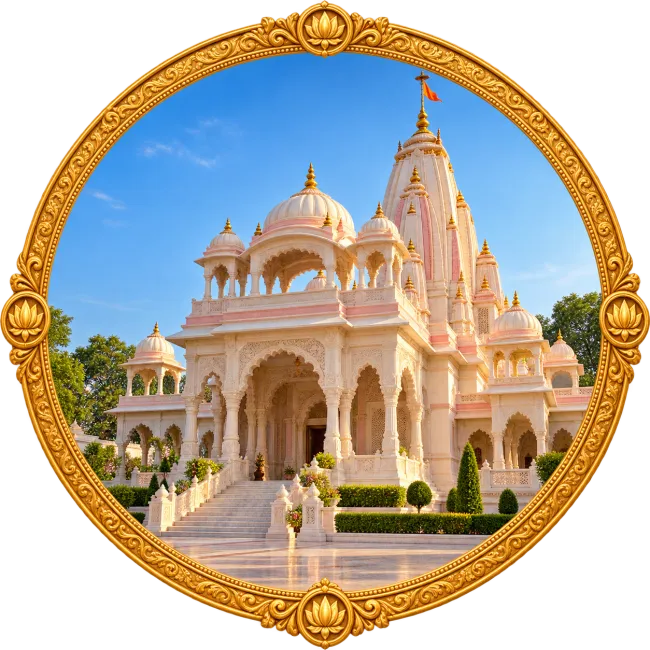
Shri Varshney Temple Aligarh
Visit Shri Varshney Temple in Aligarh—one of the city’s most prominent temples dedicated primarily to Yogiraj Lord Krishna. Known for its 90-foot-high shikhara, magnificent marble idols, grand entrance, regular sankirtan and colourful festivals, the temple is an important religious and cultural centre for devotees across the region.
About Shri Varshney Temple Aligarh
Shri Varshney Temple, also known as Teerthdham Shri Krishna and Akrur Ji Mandir, is a major Hindu temple situated near Achal Taal on GT Road in Aligarh, Uttar Pradesh.
Yogiraj Lord Krishna is the principal deity of the temple. The complex also houses beautiful marble idols of Lord Lakshmi Narayan, Lord Rama, Goddess Sita, Lakshmana, Lord Hanuman and other Hindu deities.
A grand image of Shri Akrur Ji Maharaj is installed above the main entrance. Akrur Ji was a respected member of the Yadava dynasty and a devoted follower of Lord Krishna. His presence gives the temple a distinctive religious identity.
Location of Shri Varshney Temple
Shri Varshney Temple is situated near Shri Varshney College, Achal Taal and Gandhi Nagar on GT Road, Aligarh.
Its central location makes it easily accessible by auto-rickshaw, e-rickshaw, taxi, local bus and private vehicle. Aligarh Junction Railway Station and the city’s main bus terminals are also located close to the temple.
History of Shri Varshney Temple Aligarh
Shri Varshney Temple was established through the collective efforts of the Varshney community and the Shri Varshney Mandir Society.
The temple society was established in 1995 to develop a major spiritual and cultural centre in Aligarh. Construction of the grand temple continued during the following years.
The pran-pratishtha ceremony began on Chaitra Shukla Ram Navami, 12 April 2000, with the worship of Lord Ganesha and the sacred kalash. On 15 April 2000, the beautifully decorated idols were taken through Aligarh in a grand religious procession.
The principal pran-pratishtha ceremonies were completed on 16 April 2000. The rituals were conducted under the spiritual guidance of Jagadguru Shankaracharya Pujyapad Shri Madhavashram Ji Maharaj of Badrikashram Peeth and learned acharyas from the Sanskrit College of Narwar.
The temple subsequently developed into one of Aligarh’s most important centres for worship, festivals, social service and cultural programmes.
Who Built Shri Varshney Temple?
Shri Varshney Temple was built by the Varshney community under the management of the Shri Varshney Mandir Society.
Community members contributed financial support, resources and voluntary service for the temple’s construction and development. The temple was envisioned as a centre that would preserve devotion to Lord Krishna, Hindu traditions and the cultural heritage of the Varshney community.
The temple’s idols were created from white marble by skilled artisans from Jaipur.
Main Deities of Shri Varshney Temple
Yogiraj Lord Krishna
Yogiraj Lord Krishna is the principal deity. He is worshipped as the divine teacher, protector and guide who revealed the teachings of the Bhagavad Gita.
Shri Akrur Ji Maharaj
A grand image of Shri Akrur Ji Maharaj is installed above the main entrance. Akrur Ji is remembered as a devoted follower and relative of Lord Krishna who accompanied Krishna and Balarama from Gokul to Mathura.
Shri Lakshmi Narayan
Lord Vishnu and Goddess Lakshmi are worshipped together as the divine source of protection, prosperity and well-being.
Shri Sita Ram Parivar
The temple houses sacred forms of Lord Rama, Goddess Sita, Lakshmana and Lord Hanuman. Devotees worship the Ram Parivar for righteousness, family harmony and protection.
Lord Shiva
A Shiva temple is also situated within the complex. Special jalabhishek arrangements are made during the month of Shravan.
Religious Significance of Shri Varshney Temple
Shri Varshney Temple is an important centre of Krishna devotion in Aligarh. Devotees visit the temple to pray for:
- Peace and happiness in the family
- Success in education and career
- Prosperity in business
- Protection from obstacles
- Wisdom and spiritual growth
- Happiness in married life
- Good health and long life
- Devotion to Lord Krishna
- Strength to follow the path of dharma
The temple also promotes social unity through satsang, religious celebrations, community service and cultural programmes.
Architecture of Shri Varshney Temple
Shri Varshney Temple is built in the traditional North Indian Nagara architectural style. It is recognised for having one of Aligarh’s tallest temple shikharas.
90-Foot-High Shikhara
The temple’s principal shikhara rises to a height of approximately 90 feet and can be seen from a considerable distance. Its vertical structure symbolises the spiritual journey from the earthly world towards the divine.
Grand Entrance
The temple has a large, beautifully designed entrance decorated with traditional motifs. The image of Shri Akrur Ji Maharaj installed above the gateway gives the entrance its distinctive appearance.
Marble Idols
The idols of Yogiraj Lord Krishna, Shri Lakshmi Narayan, Shri Sita Ram, Lakshmana, Lord Hanuman and other deities were carved from white marble by skilled Jaipur artisans.
Decorative Features
The temple architecture includes:
- Carved pillars
- Decorative domes
- Traditional jharokhas
- Ornamental entrance arches
- Religious wall designs
- Temple bells
- Spacious prayer halls
- A large festival courtyard
- Landscaped surroundings
- Tulsi plants and sacred trees
The complex has sufficient space for yajnas, bhajans, sankirtans, cultural programmes and major religious gatherings.
Shri Varshney Temple Summer Timings
Shri Varshney Temple Winter Timings
Festival-day schedules may be extended during Janmashtami, Nandotsav, Annakoot, Patotsav and other major celebrations.
Best Time for Darshan
During summer, the best time for peaceful morning darshan is between 6:00 AM and 8:00 AM. During winter, devotees can visit between 6:30 AM and 8:30 AM.
Visitors wishing to attend the evening Maha Aarti should reach the temple before 7:30 PM. Janmashtami, Nandotsav, Holi and Annakoot attract particularly large crowds.
Daily Puja and Rituals
The regular religious activities performed at Shri Varshney Temple include:
- Mangal Aarti
- Mishri Bhog
- Shringar Darshan
- Shringar Aarti
- Bhog Aarti
- Vishram Aarti
- Thakur Ji Seva
- Evening sankirtan
- Maha Aarti
- Maha Bhog
- Doodh Bhog
- Shayan Aarti
- Bhagavad Gita recitation
- Bhajan and kirtan
- Special yajna and havan
The temple follows a detailed seva schedule based on the daily worship of Lord Krishna.
Offerings at Shri Varshney Temple
Devotees commonly offer:
- Flowers and garlands
- Tulsi leaves
- Mishri
- Makhan
- Milk and curd
- Fruits
- Boondi laddoos
- Dry fruits
- Panchamrit
- Sweets
- New clothes for the deity
- Decorative ornaments
- Incense and lamps
Tulsi leaves are especially significant in the worship of Lord Krishna and Lord Vishnu.
Prasad at Shri Varshney Temple
The temple follows a tradition of offering pure vegetarian bhog. Common forms of prasad include:
- Boondi laddoos
- Mishri
- Makhan-mishri
- Panchamrit
- Fruits
- Dry fruits
- Annakoot Prasad
- Sawamani Prasad
During special events, prasad and meals are distributed through community bhandaras.
Major Festivals Celebrated
Shri Krishna Janmashtami
Janmashtami is one of the temple’s grandest celebrations. Morning milk abhishek, flower-bungalow decoration, bhajan, kirtan and midnight Krishna Janm Darshan are organised.
Nandotsav
Nandotsav is celebrated after Janmashtami. Devotees dress as Nanda Baba and Yashoda Maiya and bring the child form of Lord Krishna to the temple. Music, dance and prasad distribution are important parts of the celebration.
Patotsav
The temple’s consecration anniversary is celebrated as Patotsav. Special puja, yajna, abhishek, cultural programmes and bhandara are organised.
Lathmar Holi
The temple celebrates Braj-style Lathmar Holi with colours, flowers, devotional music and traditional performances. The celebration reflects the Holi traditions of Barsana and Vrindavan.
Deepavali and Annakoot
The temple is illuminated with lamps on Deepavali. On Annakoot, numerous vegetarian dishes are offered to Lord Krishna before being distributed as prasad.
Ganeshotsav
A grand idol of Lord Ganesha is installed and worshipped during Ganeshotsav. The celebration concludes with a religious procession and immersion ceremony.
Shravan Month
Special arrangements are made for jalabhishek at the Shiva shrine inside the temple complex. Sawamani Prasad programmes may also be organised.
Other Festivals Celebrated
The temple also celebrates:
- Ram Navami
- Radhashtami
- Navratri
- Govardhan Puja
- Gopashtami
- Basant Panchami
- Guru Purnima
- Makar Sankranti
- Vijayadashami
- Sharad Purnima
- Hanuman Jayanti
- Akshaya Tritiya
Entry Fee and Special Seva Charges
General entry and darshan at Shri Varshney Temple are free.
Charges or prescribed donations may apply for:
- Special abhishek
- Individual yajna or havan
- Sawamani Bhog
- Special shringar
- Festival sponsorship
- Sankalp Puja
- Annakoot seva
- Gaushala donation
All donations should be made at authorised temple counters.
Temple Facilities
The temple provides several facilities for devotees:
- Drinking water
- Water coolers
- Shoe-storage facility
- Sitting benches
- Prasad counter
- Temple office
- Washrooms
- CCTV security
- Sound system
- Festival gathering area
- Gaushala-related seva
- Space for yajna and cultural programmes
Best Season to Visit
The most comfortable period to visit Shri Varshney Temple is from October to March.
Janmashtami, Nandotsav, Lathmar Holi, Deepavali, Annakoot and Patotsav are suitable occasions for visitors wishing to experience the temple’s grand celebrations.
How to Reach Shri Varshney Temple Aligarh
By Train
Aligarh Junction is the nearest major railway station. It is connected with Delhi, Ghaziabad, Kanpur, Prayagraj, Lucknow, Agra and other cities.
Auto-rickshaws, e-rickshaws and taxis are easily available from the railway station.
By Air
Indira Gandhi International Airport in Delhi is the nearest major international airport. Visitors can travel from Delhi to Aligarh by train, bus, taxi or private vehicle.
Agra Airport is another option for travellers arriving from selected domestic destinations.
By Road
The temple is situated on GT Road and is accessible from Delhi, Ghaziabad, Bulandshahr, Etah, Kanpur, Agra and Mathura.
Local buses, autos and e-rickshaws connect the temple with different parts of Aligarh.
Approximate Distance from Important Places
Travel distance depends on the route and local traffic.
Nearby Places to Visit
Visitors can explore the following places near Shri Varshney Temple:
- Achal Taal
- Shri Varshney College
- Naqvi Park
- Aligarh Muslim University
- Sir Syed House Museum
- Maulana Azad Library
- Aligarh Fort
- Clock Tower
- Khereshwar Temple
- Gilahraj Ji Hanuman Temple
Suggested Visit Plan
Begin your visit with Mangal Aarti or Shringar Aarti at Shri Varshney Temple. After darshan, explore Achal Taal and other nearby religious places.
During the afternoon, visitors can explore Aligarh Muslim University, Sir Syed House Museum and Aligarh Fort. Return to Shri Varshney Temple in the evening to attend sankirtan and Maha Aarti.
Important Guidelines for Visitors
- Wear clean and modest clothing.
- Remove footwear at the designated shoe-storage area.
- Maintain silence near the garbhagriha.
- Follow the queue system for darshan.
- Do not touch the marble idols.
- Follow photography restrictions inside the temple.
- Avoid carrying food into the main prayer hall.
- Keep the temple premises clean.
- Use only authorised counters for donations and special seva.
- Take care of children and personal belongings during festivals.
- Follow volunteer and security instructions.
- Avoid carrying large bags during Janmashtami and Annakoot.
Conclusion
Shri Varshney Temple is one of Aligarh’s most important religious and architectural landmarks. Established by the Varshney community, the temple is primarily dedicated to Yogiraj Lord Krishna and also houses beautiful forms of Shri Akrur Ji Maharaj, Lakshmi Narayan and the Ram Parivar.
Its 90-foot-high shikhara, marble idols, detailed daily seva, evening sankirtan and colourful celebrations make it a major centre of devotion. A visit to Shri Varshney Temple offers spiritual peace while providing an opportunity to experience the religious and cultural traditions of Aligarh.