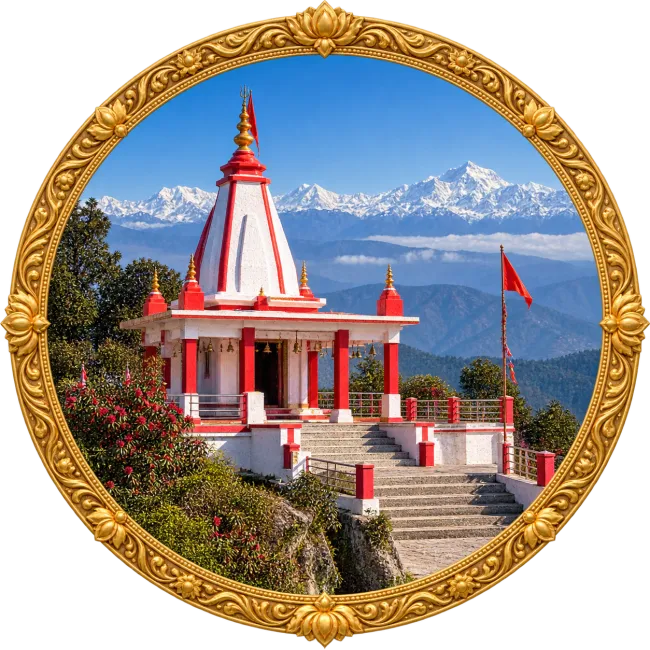
Kunjapuri Temple Tehri
Kunjapuri Temple in Tehri Garhwal is a revered Siddha Peetha dedicated to Goddess Durga. Situated on a scenic Himalayan peak near Narendra Nagar, the temple is known for its spiritual importance, peaceful atmosphere, and magnificent views of the snow-covered Himalayan ranges. Devotees visit the shrine to seek the blessings of Maa Kunjapuri for strength, protection, prosperity, and fulfilment of wishes. The temple is also famous for its beautiful sunrise and sunset views.
About Kunjapuri Temple Tehri
Kunjapuri Temple is located on Kunjapuri Hill at an elevation of approximately 1,676 metres above sea level. It is one of the thirteen important Shakti temples situated in the Shivalik range and forms a sacred spiritual triangle with Surkanda Devi Temple and Chandrabadni Devi Temple.
The sacred seat is traditionally associated with Jagadguru Adi Shankaracharya, who established and organised several Shakti Peethas during the 8th century CE. The temple structure has been repaired and renovated over the centuries while retaining its importance as an ancient centre of Shakti worship.
Maa Kunjapuri is worshipped as a powerful manifestation of Goddess Durga. The sanctum contains a sacred pindi representing the goddess. Lord Shiva, Lord Ganesha, and other Hindu deities are also worshipped within the temple complex.
From the hilltop, visitors can see Himalayan peaks such as Swargarohini, Gangotri, Bandarpunch, and Chaukhamba. The Bhagirathi Valley, Rishikesh, Haridwar, and parts of the Doon Valley can also be seen when the weather is clear.
History of Kunjapuri Temple Tehri
Kunjapuri Temple has been an important place of Shakti worship for centuries. According to religious tradition, the temple was established as a Siddha Peetha by Jagadguru Adi Shankaracharya during the 8th century CE.
Adi Shankaracharya travelled across India to revive Hindu philosophy and strengthen important pilgrimage centres. Kunjapuri was recognised as one of the sacred Shakti sites of the Tehri Garhwal region. Surkanda Devi and Chandrabadni Devi were also established as significant Shakti Peethas in the region, creating a sacred triangle of goddess temples.
The temple has undergone several renovations over time because of the mountainous climate and changing needs of devotees. It continues to preserve the traditional customs of Himalayan goddess worship.
Mythological Story of Kunjapuri Temple
The origin of Kunjapuri Temple is connected with the story of Goddess Sati and Lord Shiva. Goddess Sati was the daughter of King Daksha and the consort of Lord Shiva. King Daksha once organised a grand yajna but did not invite Lord Shiva because he disapproved of their marriage.
Sati attended the ceremony and was deeply hurt when her father insulted Lord Shiva. Unable to tolerate the humiliation of her husband, she sacrificed herself in the sacred fire of the yajna.
When Lord Shiva learned about Sati’s death, he became overwhelmed with grief and carried her body across the universe. To restore cosmic balance, Lord Vishnu used his Sudarshan Chakra to divide Sati’s body. The places where her body parts fell became sacred Shakti Peethas.
According to local belief, the upper part of Goddess Sati’s body fell at Kunjapuri Hill. The site consequently became an important centre of Shakti worship where the divine energy of the goddess is believed to remain eternally present.
Religious Significance of Kunjapuri Temple
Kunjapuri Temple is considered a Siddha Peetha, meaning a sacred place associated with spiritual power and the fulfilment of sincere prayers. Devotees worship Maa Kunjapuri for courage, protection, family welfare, prosperity, and success.
The temple is especially significant for people seeking:
- Protection from negative influences
- Strength during difficult situations
- Peace and harmony in the family
- Success in personal and professional life
- Good health and prosperity
- Fulfilment of sincere wishes
- Spiritual progress and mental peace
Many devotees visit all three temples—Kunjapuri Devi, Surkanda Devi, and Chandrabadni Devi—as part of a sacred Shakti triangle pilgrimage.
Architecture of Kunjapuri Temple
Kunjapuri Temple reflects the simple and traditional architectural character of Himalayan temples. Its bright colours, decorative entrance, sacred flags, bells, and images of lions create a powerful devotional atmosphere.
The main architectural features include:
- A hilltop sanctum dedicated to Maa Kunjapuri
- A sacred pindi representing the goddess
- Images of Lord Shiva and Lord Ganesha
- A decorated entrance with lion figures
- Numerous temple bells offered by devotees
- A spacious courtyard for prayers and religious ceremonies
- A covered staircase leading towards the temple
- Viewing areas offering panoramic Himalayan scenery
The open courtyard provides spectacular views of the surrounding valleys and distant mountains. The peaceful environment makes the temple suitable for prayer, meditation, and spiritual reflection.
Kunjapuri Temple Timings
The temple generally remains open throughout the day without a fixed afternoon closure. Timings may be adjusted during Navratri, special festivals, severe weather, or local religious ceremonies.
Best Time for Darshan
The best time for darshan is between 6:00 AM and 8:00 AM. Devotees can attend the morning puja and aarti while also enjoying the sunrise over the Himalayan ranges.
Evening darshan between 5:30 PM and 7:30 PM is suitable for visitors who want to witness the sunset and participate in the evening aarti.
Navratri is the most spiritually vibrant period, but the temple receives large crowds during these celebrations. Visitors seeking peaceful darshan should choose a regular weekday.
Best Season to Visit Kunjapuri Temple
Kunjapuri Temple can be visited throughout the year, but the most comfortable periods are March to June and September to November.
Early mornings can remain cold even during warmer months. Visitors should carry a light jacket, while heavier woollen clothing is advisable during winter.
Daily Puja and Rituals
Daily worship at Kunjapuri Temple follows traditional Shakti customs. The rituals begin with the opening of the sanctum and the ceremonial worship of Maa Kunjapuri.
The principal rituals include:
- Morning purification of the sanctum
- Decoration of the sacred pindi
- Offering of flowers and chunari
- Lighting of lamps and incense
- Recitation of Durga mantras
- Morning aarti
- Bhog offering
- Evening puja
- Evening aarti
- Distribution of prasad
Devotees may request special pujas depending on the availability of temple priests and local arrangements.
Offerings at Kunjapuri Temple
Common offerings made to Maa Kunjapuri include:
- Red flowers
- Coconut
- Red chunari
- Sindoor
- Incense sticks
- Ghee lamps
- Sweets
- Fruits
- Sacred threads
- Coins and voluntary donations
Puja materials can usually be purchased from small shops near the temple approach. Visitors should place offerings only in designated areas and avoid leaving plastic packaging inside the complex.
Major Festivals Celebrated
Chaitra Navratri
Chaitra Navratri is one of the most important festivals at Kunjapuri Temple. Special pujas, Durga recitations, devotional songs, and aartis are organised during the nine-day celebration.
Sharadiya Navratri
Sharadiya Navratri attracts a large number of devotees from Tehri Garhwal, Rishikesh, Narendra Nagar, and nearby regions. The temple is beautifully decorated, and special rituals are performed every day.
Durga Ashtami
Durga Ashtami is celebrated with special worship of Maa Kunjapuri. Devotees offer flowers, coconut, chunari, and prasad to the goddess.
Ram Navami
Ram Navami is observed with prayers, devotional chanting, and religious ceremonies.
Diwali
Lamps are lit throughout the temple complex during Diwali, creating a peaceful and festive atmosphere.
Sunrise View from Kunjapuri Temple
Kunjapuri Temple is one of the most popular sunrise viewpoints near Rishikesh. The first rays of sunlight illuminate the snow-covered Himalayan peaks, creating a memorable experience for pilgrims and nature lovers.
On clear days, visitors can see:
- Swargarohini Range
- Gangotri Range
- Bandarpunch Peak
- Chaukhamba Range
- Bhagirathi Valley
- Rishikesh
- Haridwar
- Doon Valley
Visitors planning to watch the sunrise should check the seasonal sunrise time and weather conditions before travelling. Entry before the regular opening time depends on local temple arrangements.
Trekking to Kunjapuri Temple
Adventure enthusiasts can trek to Kunjapuri Temple from Hindolakhal. The forest route is approximately 5 kilometres and passes through peaceful Himalayan surroundings.
Another popular trekking route begins near Rishikesh and passes through local villages and forested areas. The exact distance depends on the selected starting point. First-time visitors should take a local guide when using forest trails.
Travellers arriving by road can drive close to the temple and then climb the staircase leading to the summit. Comfortable footwear is recommended because the steps can be tiring for elderly visitors.
Entry and Darshan Details
- Entry to the temple is free.
- General darshan does not require advance booking.
- Special puja arrangements may require direct coordination with temple priests.
- Photography may be restricted inside the sanctum.
- Footwear must be removed before entering the main worship area.
- Extra crowd-control arrangements may be introduced during Navratri.
- Visitors should keep their belongings secure and avoid feeding monkeys.
How to Reach Kunjapuri Temple
By Air
Jolly Grant Airport in Dehradun is the nearest airport. It is approximately 43 kilometres from the temple. Taxis are available from the airport to Narendra Nagar, Hindolakhal, and Kunjapuri Temple.
By Train
Yog Nagari Rishikesh Railway Station and Rishikesh Railway Station are the nearest railheads. The temple is approximately 27 kilometres from the main railway area. Taxis and local vehicles can be hired from Rishikesh.
Haridwar Junction is another major railway station with better connectivity to Delhi, Mumbai, Kolkata, Lucknow, and other major cities.
By Road
Kunjapuri Temple is connected by road through Narendra Nagar and Hindolakhal. Visitors travelling from Rishikesh can follow the Rishikesh–Gangotri road towards Narendra Nagar and continue towards Kunjapuri.
Buses and shared vehicles operate up to Narendra Nagar and Hindolakhal, but their frequency may be limited. Hiring a taxi from Rishikesh is the most convenient option.
Approximate Distance from Major Places
Travel time may increase during rainfall, festivals, road maintenance, and periods of heavy traffic.
Nearby Places to Visit
Narendra Nagar
Narendra Nagar is a historic hill town known for its peaceful surroundings, Himalayan scenery, and connection with the former Tehri royal family.
Rishikesh
Rishikesh is a major spiritual destination famous for the River Ganga, Triveni Ghat, ashrams, yoga centres, Ram Jhula, and evening Ganga aarti.
Neer Garh Waterfall
Neer Garh Waterfall is a popular natural attraction near Rishikesh. It is suitable for travellers interested in short hikes and scenic surroundings.
Surkanda Devi Temple
Surkanda Devi Temple is another important Shakti shrine in Tehri Garhwal. It can be included in a longer religious journey through the region.
Chandrabadni Devi Temple
Chandrabadni Devi Temple completes the sacred Shakti triangle formed with Kunjapuri Devi and Surkanda Devi.
Tehri Lake
Tehri Lake is known for its mountain scenery and water-based recreational activities. It can be included in a full-day or overnight Tehri itinerary.
Suggested Visit Plan
Sunrise Visit
- Depart from Rishikesh before dawn.
- Reach the temple approach before sunrise.
- Climb the steps to the hilltop.
- Watch the sunrise from the temple viewpoint.
- Attend morning puja and aarti.
- Offer prayers and receive prasad.
- Spend time viewing the Himalayan ranges.
- Return to Narendra Nagar or Rishikesh.
Regular Morning Visit
- Reach the temple between 7:00 AM and 9:00 AM.
- Complete darshan and offer puja materials.
- Explore the courtyard and viewpoints.
- Visit Narendra Nagar while returning.
- Continue towards Rishikesh for other temples and Ganga aarti.
Visitor Guidelines
- Wear modest and comfortable clothing.
- Carry a jacket because hilltop weather can change quickly.
- Use shoes suitable for climbing steps.
- Carry drinking water, especially during summer.
- Avoid visiting forest trails alone during darkness.
- Follow local weather and road advisories during the monsoon.
- Do not throw plastic, food packets, or religious materials on the hill.
- Avoid feeding or disturbing monkeys.
- Maintain silence near the sanctum.
- Senior citizens should climb slowly and take rest when required.
- Follow the instructions of priests and temple authorities.
- Confirm special-festival arrangements before travelling.
Conclusion
Kunjapuri Temple in Tehri Garhwal is a remarkable destination where spirituality and Himalayan beauty come together. Traditionally associated with Adi Shankaracharya and revered as a Siddha Peetha of Goddess Durga, the temple holds immense importance for devotees of Shakti.
Its sacred atmosphere, ancient traditions, morning and evening aartis, sunrise views, and panoramic Himalayan scenery make it one of the most memorable religious places near Narendra Nagar and Rishikesh. A visit to Kunjapuri Temple offers devotees not only the blessings of Maa Kunjapuri but also a deep sense of peace, strength, and spiritual renewal.