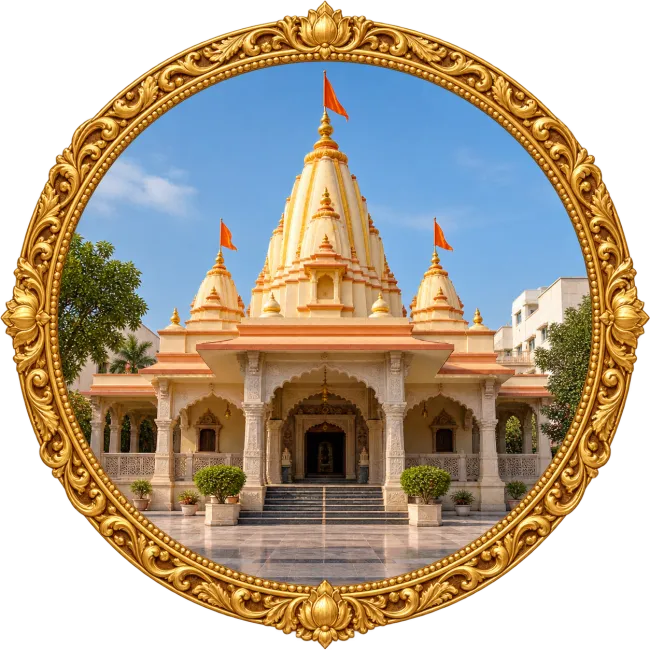
Datta Mandir Indore
Visit Datta Mandir in Indore, a sacred shrine dedicated to Lord Dattatreya, the divine form representing the combined powers of Lord Brahma, Lord Vishnu, and Lord Shiva. The temple is known for its peaceful spiritual atmosphere, devotional activities, Dattatreya worship, and connection with the Avadhuta tradition.
About Datta Mandir Indore
Datta Mandir, also known as Shri Datt Devlaya Avadhut Mandiram, is a devotional centre dedicated to Lord Dattatreya in Indore, Madhya Pradesh.
Lord Dattatreya is worshipped as the combined form of the Hindu Trinity—Brahma, Vishnu, and Mahesh. He is also regarded as the divine Guru and a symbol of knowledge, yoga, renunciation, compassion, and spiritual discipline.
The temple attracts devotees who follow the Datta Sampradaya and those seeking the blessings of Dattatreya for peace, wisdom, protection, and spiritual progress. Regular puja, aarti, bhajan, mantra chanting, and religious programmes are organised at the temple.
The shrine has gained attention in Indore because of its devotional activities and the growing number of followers associated with the Dattatreya tradition.
Datta Mandir at a Glance
History of Datta Mandir Indore
Datta Mandir Indore is associated with the worship of Lord Dattatreya and the Avadhuta spiritual tradition. The temple has developed as a place for devotees to gather, perform worship, listen to spiritual discourses, and participate in religious celebrations.
The Shri Datt Devlaya Avadhut Mandiram held its Pran Pratishtha Mahotsav from 27 June 2026 to 3 July 2026. The ceremony marked the formal installation and consecration of the deity in the temple.
As a newly established devotional centre, the temple continues to develop its regular worship schedule, spiritual activities, and facilities for devotees. The temple’s traditions are based on the teachings of Lord Dattatreya, who is regarded as the Adi Guru and a guide on the path of self-realisation.
The temple is also connected with the wider Datta tradition followed in Maharashtra, Madhya Pradesh, Gujarat, Karnataka, and other parts of India.
Religious Significance of Lord Dattatreya
Lord Dattatreya is considered the embodiment of the Trimurti—Lord Brahma, Lord Vishnu, and Lord Shiva. His three heads represent creation, preservation, and transformation.
He is also worshipped as the divine Guru who teaches people through nature, life experiences, self-discipline, and spiritual knowledge.
Devotees visit Datta Mandir to pray for:
- Peace of mind
- Spiritual knowledge
- Protection from difficulties
- Guidance in life
- Removal of negative influences
- Success in important work
- Freedom from fear and confusion
- Family happiness
- Health and prosperity
- Blessings of a true Guru
Thursday is considered the most auspicious day for worshipping Lord Dattatreya. Devotees often observe fasting, visit the temple, offer prayers, and recite Datta mantras on this day.
Mythological Story of Lord Dattatreya
According to Hindu tradition, Lord Dattatreya was born to Sage Atri and Devi Anasuya. Anasuya was known for her purity, devotion, and spiritual power.
According to one popular legend, the divine Trinity—Brahma, Vishnu, and Shiva—tested the devotion of Anasuya. Pleased with her purity and dedication, they blessed her with a son who represented the combined qualities of all three divine powers.
This son was Lord Dattatreya. He became a great spiritual teacher and was regarded as an Avadhuta, a person who had risen above worldly attachments and dualities.
Lord Dattatreya is also associated with the teaching of the 24 Gurus. He learned valuable lessons from nature and ordinary living beings, including the earth, wind, sky, water, fire, animals, birds, and human experiences.
Symbolism of Lord Dattatreya
Lord Dattatreya is traditionally shown with three heads and six hands. His three heads represent Brahma, Vishnu, and Shiva.
He is often depicted with:
- A cow representing Mother Earth and nourishment
- Four dogs representing the four Vedas
- A kamandalu representing renunciation
- A trident representing Lord Shiva
- A conch and chakra representing Lord Vishnu
- A rosary representing spiritual practice
- A meditation posture representing wisdom and self-realisation
The cow and four dogs are important symbols in Dattatreya worship. They remind devotees to respect nature, sacred knowledge, compassion, and all living beings.
Importance of the Avadhuta Tradition
The word Avadhuta refers to a spiritually liberated person who has moved beyond worldly attachments, ego, and material desires.
The Avadhuta tradition encourages devotees to:
- Practise self-control
- Remain calm in difficult situations
- Treat all living beings with compassion
- Learn from nature
- Avoid unnecessary attachment
- Follow truth and discipline
- Develop devotion and inner awareness
- Serve society and the needy
Datta Mandir provides a peaceful environment for devotees interested in meditation, mantra chanting, spiritual learning, and Guru Bhakti.
Architecture of Datta Mandir
Datta Mandir follows the traditional design of a Hindu devotional shrine. The main sanctum houses the idol or image of Lord Dattatreya, where devotees offer prayers and participate in aarti.
The temple complex may include a prayer hall, sanctum, gathering area, space for bhajans, and facilities for religious ceremonies.
Important features include:
- Main sanctum of Lord Dattatreya
- Traditional temple entrance
- Prayer and meditation hall
- Space for bhajan and kirtan
- Worship area for lamps and offerings
- Religious gathering space
- Facilities for special puja and celebrations
The temple’s atmosphere is simple, peaceful, and focused on devotion and spiritual practice.
Datta Mandir Indore Timings
The regular schedule may change on Thursdays, Datta Jayanti, Guru Purnima, Pran Pratishtha anniversaries, and other special occasions. Devotees attending a specific ritual should confirm the day’s schedule at the temple.
Best Time for Darshan
The best time to visit Datta Mandir is between 06:30 AM and 09:00 AM. The morning atmosphere is peaceful and suitable for prayer, meditation, and mantra chanting.
Thursday is considered especially auspicious for Lord Dattatreya worship. The temple may be more crowded on Thursday mornings and evenings.
Visitors who wish to attend the evening aarti should reach the temple before 07:15 PM.
Daily Puja and Rituals
Daily worship at Datta Mandir begins with the opening of the sanctum and preparation of the deity. Lord Dattatreya is decorated with flowers, clothes, garlands, and sacred ornaments.
Common rituals include:
- Temple purification
- Abhishek
- Shringar of Lord Dattatreya
- Offering of flowers and garlands
- Datta Mantra chanting
- Morning puja and aarti
- Guru Charitra recitation
- Bhajan and kirtan
- Bhog offering
- Evening deep aarti
- Prasad distribution
- Guru Seva and Annadan
Devotees may recite “Shri Gurudev Datta,” Datta Bavani, Guru Charitra, Avadhuta Gita, or Dattatreya Stotra during worship.
Offerings at Datta Mandir
Devotees can offer traditional puja items to Lord Dattatreya. Common offerings include:
- Yellow flowers
- Marigold garlands
- Coconut
- Bananas
- Fruits
- Milk
- Panchamrit
- Sweets
- Peda
- Boondi ladoo
- Incense sticks
- Ghee lamps
- Yellow cloth
- Tulsi leaves
- Dry fruits
- Donations for Annadan
Devotees should offer all puja materials through the priest or at the designated offering counter.
Major Festivals Celebrated
Datta Jayanti
Datta Jayanti is the most important festival celebrated at Datta Mandir. It marks the appearance day of Lord Dattatreya on the full-moon day of Margashirsha month.
Special programmes include:
- Abhishek
- Dattatreya Puja
- Guru Charitra Parayan
- Bhajan and kirtan
- Maha Aarti
- Religious discourses
- Annadan
- Prasad distribution
- Processions
Guru Purnima
Guru Purnima is celebrated to honour spiritual teachers and Gurus. Devotees worship Lord Dattatreya as the divine Guru and participate in special prayers and Guru Seva.
Thursdays
Every Thursday is considered auspicious for Datta worship. Devotees visit the temple, observe fasting, offer yellow flowers, and chant “Shri Gurudev Datta.”
Hanuman Jayanti
As Lord Dattatreya is associated with spiritual strength and devotion, special devotional programmes may be organised on Hanuman Jayanti.
Mahashivratri
Because Lord Dattatreya represents the combined form of Brahma, Vishnu, and Shiva, devotees also offer special prayers during Mahashivratri.
Navratri
Special bhajans, pujas, and spiritual programmes may be organised during Navratri.
Annadan and Seva
Seva is an important part of the Datta tradition. Devotees may participate in charitable and community activities organised by the temple.
Common forms of seva include:
- Annadan
- Distribution of prasad
- Donation of grains
- Supporting religious events
- Helping the needy
- Serving devotees
- Sponsoring puja
- Supporting temple maintenance
Annadan is considered a sacred service because it provides nourishment and support to people in need.
Entry Fee and Visit Duration
There is no entry fee for visiting Datta Mandir. Devotees can have general darshan during the regular opening hours.
A normal visit takes 30 to 60 minutes. Visitors attending Guru Charitra recitation, bhajan, aarti, or special puja may spend additional time at the temple.
Charges may apply for personalised puja, special offerings, or ceremonies performed with the assistance of a priest.
How to Reach Datta Mandir Indore
By Air
Devi Ahilyabai Holkar International Airport is the nearest airport. Visitors can hire a taxi, cab, or auto-rickshaw to reach the temple.
By Train
Indore Junction is the nearest major railway station. It is well connected with Delhi, Mumbai, Bhopal, Ujjain, Jaipur, Ahmedabad, Pune, and other major cities.
Auto-rickshaws, e-rickshaws, taxis, and city buses are available from the railway station.
By Road
Indore is well connected by road with Ujjain, Bhopal, Dewas, Omkareshwar, Maheshwar, Dhar, and other cities of Madhya Pradesh.
Visitors can reach the temple by private vehicle, taxi, auto-rickshaw, e-rickshaw, or app-based cab.
Distance from Important Places
The actual distance may vary depending on the temple’s exact location, selected route, and traffic conditions.
Nearby Places to Visit
Visitors can explore the following attractions in Indore:
- Khajrana Ganesh Temple
- Annapurna Temple
- Lal Bagh Palace
- Rajwada Palace
- Kanch Mandir
- Gopal Mandir
- Bada Ganpati Temple
- Krishnapura Chhatris
- Central Museum
- Chappan Dukan
- Sarafa Bazaar
- Pitra Parvat
Suggested Indore Temple Route
A convenient temple and sightseeing route can be planned in the following order:
- Datta Mandir
- Khajrana Ganesh Temple
- Annapurna Temple
- Lal Bagh Palace
- Rajwada Palace
- Gopal Mandir
- Kanch Mandir
- Bada Ganpati Temple
- Sarafa Bazaar
Visitors can complete the temple visits during the day and enjoy the famous Sarafa food market in the evening.
Visitor Guidelines
- Wear clean and modest clothes.
- Remove footwear before entering the temple.
- Maintain silence during meditation and prayer.
- Keep mobile phones on silent mode.
- Follow the queue system during aarti and festivals.
- Do not touch the idol without permission.
- Place offerings only at designated counters.
- Ask before taking photographs inside the temple.
- Do not carry large bags into the prayer area.
- Respect priests and devotees.
- Avoid disturbing bhajan, kirtan, or scripture recitation.
- Keep the temple premises clean.
- Follow the instructions given by temple staff.
- Reach early on Thursdays and Datta Jayanti.
- Participate in Annadan and Seva according to your capacity.
Conclusion
Datta Mandir Indore is a peaceful devotional centre dedicated to Lord Dattatreya, the divine Guru and combined form of Brahma, Vishnu, and Shiva. The temple’s connection with the Datta Sampradaya, Avadhuta tradition, Guru Bhakti, mantra chanting, and spiritual service makes it a meaningful place for devotees.
A visit to Datta Mandir offers an opportunity to seek wisdom, inner peace, protection, and divine guidance. The temple is especially important for devotees who follow Lord Dattatreya and wish to deepen their spiritual connection through puja, aarti, meditation, and Seva.