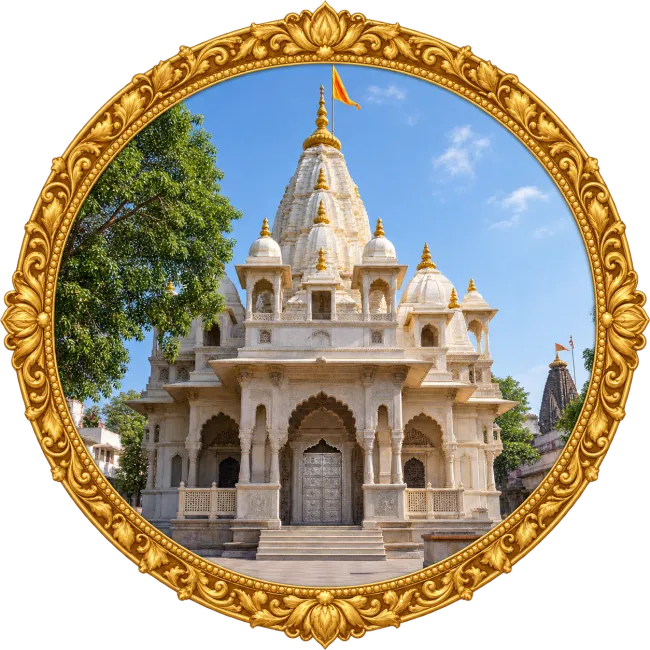
Dwarkadhish Gopal Temple Ujjain
Visit Dwarkadhish Gopal Temple in Ujjain, one of the city’s most prominent temples dedicated to Lord Krishna. Situated in the busy market area near Chhatri Chowk, the temple is famous for its beautiful Maratha architecture, marble sanctum, silver-plated doors, magnificent idol of Lord Krishna, and the sacred Hari-Har Milan celebration. Its devotional atmosphere makes it an important destination for devotees visiting Ujjain.
About Dwarkadhish Gopal Temple Ujjain
Dwarkadhish Gopal Temple, popularly known as Gopal Mandir, is a revered Krishna temple located in the heart of Ujjain, Madhya Pradesh. It is considered one of the largest and most important temples in the city after Mahakaleshwar Jyotirlinga Temple.
The temple is dedicated to Lord Krishna in his Dwarkadhish and Gopal forms. Dwarkadhish represents Lord Krishna as the king of Dwarka, while Gopal represents his loving form as the protector of cows and devotees.
The temple was constructed in 1833 CE by Maharani Baijabai Shinde, wife of the Maratha ruler Maharaja Daulat Rao Shinde of Gwalior. Built in the traditional Maratha architectural style, the temple contains a spacious courtyard, an impressive spire, a marble-inlaid sanctum, and beautifully decorated silver-plated doors.
Along with Lord Krishna, devotees can also have darshan of Radha Rani, Lord Shiva, Goddess Parvati, and Garuda within the temple complex.
Dwarkadhish Gopal Temple at a Glance
History of Dwarkadhish Gopal Temple
Dwarkadhish Gopal Temple was constructed in 1833 CE by Maharani Baijabai Shinde, the wife of Maharaja Daulat Rao Shinde. The Shinde or Scindia rulers played an important role in the religious and architectural development of Ujjain during the Maratha period.
Maharani Baijabai was known for her religious devotion and support for temples and public institutions. She commissioned the construction of this grand temple in the central market area so that residents and visiting devotees could easily worship Lord Krishna.
The temple is particularly famous for its silver-plated doors. According to popular tradition, these doors were originally connected with the historic Somnath Temple. They were taken away during medieval invasions and were later recovered by the Maratha rulers before being installed at Gopal Mandir. The historical details associated with their journey are preserved mainly through local tradition.
Over the years, Gopal Mandir has remained an important centre of Krishna devotion in Ujjain. The temple continues to preserve its Maratha-era appearance, religious traditions, and connection with the Scindia royal family.
Religious Significance of Gopal Mandir
Lord Krishna is worshipped here as Dwarkadhish, the king of Dwarka, and Gopal, the loving protector of cows and devotees. These forms represent divine leadership, wisdom, compassion, protection, and unconditional love.
Devotees believe that worshipping Lord Dwarkadhish with sincerity brings peace, prosperity, family happiness, and protection from difficulties. Many visitors also pray for success, harmony in relationships, and spiritual growth.
The temple has additional importance because of the presence of Lord Shiva and Goddess Parvati. This represents the spiritual unity between the Vaishnava and Shaiva traditions.
Devotees visit the temple to pray for:
- Peace and happiness in the family
- Success in personal and professional life
- Protection from negative influences
- Prosperity and financial stability
- Harmony in relationships
- Fulfilment of sincere wishes
- Wisdom and spiritual development
- Devotion towards Lord Krishna
Hari-Har Milan at Gopal Mandir
Hari-Har Milan is one of the most important religious events celebrated at Dwarkadhish Gopal Temple. The festival symbolises the divine meeting of Hari, Lord Vishnu or Krishna, and Har, Lord Shiva.
It is celebrated on Vaikuntha Chaturdashi during the Hindu month of Kartik. On this sacred occasion, the ceremonial procession of Lord Mahakaleshwar reaches Gopal Mandir at night to meet Lord Dwarkadhish.
Special puja is performed after the arrival of Lord Mahakal. According to tradition, Lord Shiva offers bilva leaves to Lord Vishnu, while Lord Vishnu offers tulsi leaves to Lord Shiva. This exchange represents harmony between Shaiva and Vaishnava traditions.
Thousands of devotees gather to witness this unique celebration. The temple and surrounding market are decorated with flowers and lights, while devotional chanting continues during the ceremony.
Architecture of Dwarkadhish Gopal Temple
Gopal Mandir is a remarkable example of 19th-century Maratha temple architecture. The temple’s grand structure stands prominently in the middle of Ujjain’s traditional market area.
The temple complex contains a spacious courtyard surrounded by pillared corridors. Its elevated platform and tall spire give the temple an impressive appearance.
The sanctum is beautifully decorated with marble inlay work. The silver-plated entrance doors, carved pillars, arches, and traditional decorative elements highlight the artistic excellence of the Maratha period.
The principal idol of Lord Krishna is installed on a marble altar. The deity is beautifully decorated with colourful clothes, ornaments, flowers, and a crown during daily worship.
Important architectural features include:
- Traditional Maratha-style construction
- Elevated temple platform
- Spacious central courtyard
- Marble-inlaid sanctum
- Silver-plated doors
- Tall temple spire
- Stone pillars and decorative arches
- Separate shrines for other deities
- Traditional carvings and ornamental designs
Dwarkadhish Gopal Temple Timings
The schedule may change on Janmashtami, Vaikuntha Chaturdashi, Hari-Har Milan, Annakoot, Holi, Diwali, eclipses, and other special occasions. Devotees should confirm the day’s ritual schedule at the temple before attending a specific puja.
Best Time for Darshan
The best time for a peaceful darshan is between 06:30 AM and 09:00 AM. The market remains relatively less crowded during the morning, allowing devotees to spend more time near the sanctum.
Visitors who wish to attend the evening aarti should reach the temple before 06:45 PM. The illuminated temple and devotional atmosphere during evening worship offer a beautiful spiritual experience.
October to March is the most comfortable period for visiting Ujjain. Janmashtami and Hari-Har Milan provide a grand experience, but the temple remains heavily crowded during these festivals.
Daily Puja and Rituals
The daily worship of Lord Dwarkadhish follows traditional Krishna temple rituals. The deity is awakened in the morning, ceremonially bathed, dressed, decorated, and offered food at different times of the day.
The principal daily rituals include:
- Mangala darshan
- Abhishek of the deity
- Shringar and ornamentation
- Morning puja and aarti
- Offering of tulsi leaves
- Bhog offering
- Krishna mantra chanting
- Evening puja and aarti
- Bhajan and kirtan
- Night darshan
- Shayan seva
The clothes, ornaments, flowers, and decorations of Lord Krishna may be changed according to the day, season, and festival.
Offerings at Dwarkadhish Gopal Temple
Devotees offer items traditionally associated with Lord Krishna. Common offerings include:
- Tulsi leaves
- Fresh flowers
- Flower garlands
- Makhan and mishri
- Milk and curd
- Panchamrit
- Fruits
- Coconut
- Sooji halwa
- Pedas and other sweets
- Yellow clothes
- Flute and peacock-feather decorations
- Incense sticks
- Ghee lamps
Visitors should hand their offerings to the temple priest or place them at the designated offering counter.
Major Festivals Celebrated
Krishna Janmashtami
Janmashtami is the principal festival celebrated at Gopal Mandir. The temple is beautifully decorated with flowers, lights, and traditional ornaments. Special pujas, bhajans, kirtans, and midnight celebrations are organised to commemorate the birth of Lord Krishna.
Hari-Har Milan
Hari-Har Milan is celebrated on Vaikuntha Chaturdashi. The ceremonial procession of Lord Mahakaleshwar arrives at Gopal Mandir for the divine meeting of Lord Shiva and Lord Krishna.
Annakoot and Govardhan Puja
A large variety of food preparations is offered to Lord Krishna during Annakoot. The festival celebrates Lord Krishna’s lifting of Govardhan Hill and his protection of the residents of Braj.
Holi
Holi is celebrated with colours, flowers, devotional songs, and Krishna bhajans. The celebration reflects Lord Krishna’s joyful traditions associated with Braj.
Radhashtami
Radhashtami celebrates the appearance of Radha Rani. Special decoration, puja, and devotional singing are organised at the temple.
Diwali
The temple is decorated with lamps during Diwali. Special worship is performed for Lord Krishna, and devotees pray for prosperity and happiness.
Gita Jayanti
Devotees recite verses from the Bhagavad Gita and remember the teachings given by Lord Krishna to Arjuna.
Entry Fee and Visit Duration
There is no entry fee for visiting Dwarkadhish Gopal Temple. General darshan is available to devotees during the regular opening hours.
A normal visit takes 30 to 45 minutes. During Janmashtami, Hari-Har Milan, and other major festivals, devotees may need additional time because of long queues and crowd-control arrangements.
How to Reach Dwarkadhish Gopal Temple
By Air
The nearest airport is Devi Ahilyabai Holkar Airport in Indore. Taxis and cab services are available from the airport to Ujjain. The journey usually takes 1.5 to 2 hours, depending on traffic.
By Train
Ujjain Junction is the nearest major railway station. It is connected with Indore, Bhopal, Delhi, Mumbai, Jaipur, Ahmedabad, Kota, Varanasi, and several other cities.
Visitors can hire an auto-rickshaw, e-rickshaw, or taxi from the railway station to Gopal Mandir.
By Road
Ujjain is well connected by road with Indore, Bhopal, Dewas, Ratlam, Omkareshwar, and other cities. Government and private buses operate regularly.
Since the temple is situated in a busy market with narrow roads, using an auto-rickshaw or e-rickshaw is generally more convenient than taking a private car directly to the entrance.
Distance from Important Places
Travel distance may vary according to the selected route, parking location, and traffic conditions.
Nearby Places to Visit
Visitors can also explore the following religious places near Gopal Mandir:
- Mahakaleshwar Jyotirlinga Temple
- Harsiddhi Mata Temple
- Ram Ghat
- Shri Kaal Bhairav Temple
- Bade Ganeshji Ka Mandir
- Chaubis Khamba Mata Temple
- Shri Dwarkadhish Temple
- Ram Janardan Temple
- Gadkalika Temple
- Mangalnath Temple
- Sandipani Ashram
- Bhartrihari Caves
Suggested Ujjain Darshan Route
A convenient temple itinerary can be arranged in the following order:
- Mahakaleshwar Jyotirlinga Temple
- Bade Ganeshji Ka Mandir
- Harsiddhi Mata Temple
- Ram Ghat
- Dwarkadhish Gopal Temple
- Gadkalika Temple
- Sandipani Ashram
- Mangalnath Temple
- Kal Bhairav Temple
Visitors can modify the route according to temple timings, traffic, and festival arrangements.
Visitor Guidelines
- Wear clean and modest clothes inside the temple.
- Remove footwear before entering the main temple area.
- Maintain silence near the sanctum.
- Avoid touching the idols, marble work, and silver-plated doors.
- Follow the queue and instructions given by temple staff.
- Confirm permission before taking photographs.
- Place donations only in authorised donation boxes.
- Keep personal belongings secure in the crowded market.
- Avoid carrying large bags inside the temple.
- Use an auto-rickshaw or e-rickshaw during busy market hours.
- Reach early during Janmashtami and Hari-Har Milan.
- Confirm special aarti timings at the temple on festival days.
- Keep the temple and surrounding market area clean.
Conclusion
Dwarkadhish Gopal Temple is one of the most beautiful and spiritually significant Krishna temples in Ujjain. Constructed in 1833 CE by Maharani Baijabai Shinde, the temple represents the artistic excellence and religious devotion of the Maratha period.
Its marble sanctum, silver-plated doors, beautiful idol of Lord Krishna, spacious courtyard, and unique Hari-Har Milan celebration make it a special destination for devotees. A visit to Gopal Mandir offers an opportunity to experience Krishna devotion while discovering an important part of Ujjain’s religious and architectural heritage.