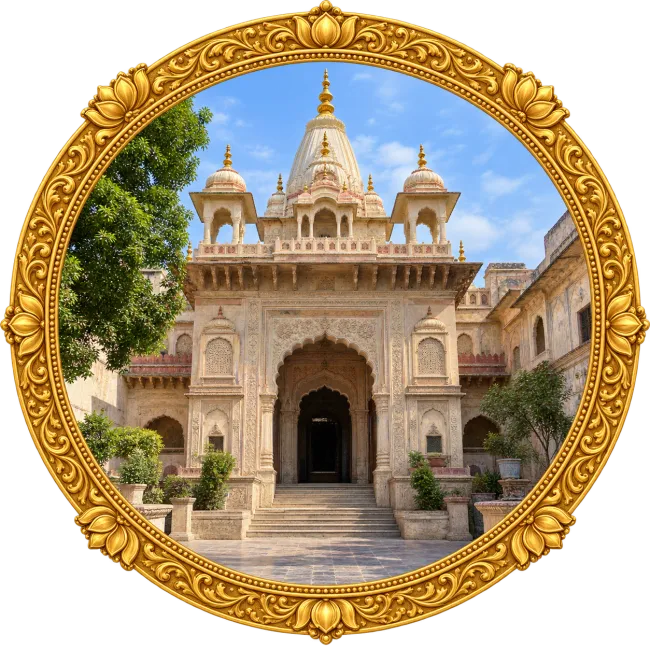
Sri Radha Shyam Sundar Temple Vrindavan
Visit Sri Radha Shyam Sundar Temple in Vrindavan—one of the seven principal Goswami temples associated with the Gaudiya Vaishnava tradition. The temple is famous for the beautiful deity of Shyam Sundar, believed to have manifested from the heart of Srimati Radharani. Its sacred history, traditional worship, peaceful courtyard, and devotional atmosphere make it an important destination for devotees of Radha and Krishna.
About Sri Radha Shyam Sundar Temple Vrindavan
Sri Radha Shyam Sundar Temple is situated in the Seva Kunj area of Vrindavan, close to Loi Bazaar and Radha Damodar Temple. It was established by Shyamananda Prabhu, an important Vaishnava saint and disciple of Hridaya Chaitanya.
According to the temple tradition, the spiritual foundation of the shrine dates to Vasant Panchami in 1578. The original deity of Shyam Sundar is believed to have been personally manifested by Srimati Radharani from her heart and presented to Shyamananda Prabhu.
The temple’s central, larger deities of Sri Radha Shyam Sundar were installed by the renowned Vaishnava scholar Baladeva Vidyabhushana on Vasant Panchami in 1719. The temple was developed with support from Vaishnava acharyas and royal patrons, including the rulers of Bharatpur.
History of Sri Radha Shyam Sundar Temple
Shyamananda Prabhu was originally known as Dukhi Krishnadas. He received spiritual initiation from Hridaya Chaitanya and later travelled to Vrindavan, where he studied devotional scriptures and served under the guidance of Jiva Goswami.
According to Vaishnava tradition, Shyamananda Prabhu regularly cleaned the sacred groves of Seva Kunj. During this service, he discovered a beautiful golden anklet. The anklet belonged to Srimati Radharani, who had lost it while performing her divine pastimes in the grove.
When Shyamananda returned the anklet, Radharani blessed him by marking his forehead with it. This sacred mark became the distinctive Shyamanandi tilak. She also gave him the name “Shyamananda,” meaning one who gives joy to Shyama or one who receives divine bliss through Radha and Krishna.
Radharani then manifested a small deity of Lord Krishna from her heart and presented it to Shyamananda Prabhu. This deity became known as Sri Shyam Sundar. The small original deity is affectionately called “Lala.”
In 1580, a deity of Radharani known as “Lali” was brought through the patronage of the Bharatpur royal family. The divine marriage ceremony of Lala and Lali was celebrated on Vasant Panchami. This festival continues to hold special importance at the temple.
In 1719, Baladeva Vidyabhushana installed the larger central deities of Sri Radha Shyam Sundar. The temple also preserves the deities of Sri Radha Kunjabihari, which are associated with the devotional traditions of Nandgaon.
Deities Worshipped in the Temple
Three principal sets of Radha-Krishna deities can be seen on the temple altar:
Lala and Lali
The small deity of Shyam Sundar, known as Lala, is considered the original deity manifested from the heart of Radharani. Lali is the accompanying deity of Srimati Radharani.
Sri Radha Kunjabihari
These deities represent Radha and Krishna enjoying their divine pastimes in the sacred forest groves of Vrindavan.
Sri Radha Shyam Sundar
The larger central deities were installed by Baladeva Vidyabhushana in 1719. The deity of Shyam Sundar was prepared from sacred stone, while the deity of Radharani was made using ashtadhatu, a traditional combination of eight metals.
Significance of Sri Radha Shyam Sundar Temple
The temple holds a special place in the devotional history of Vrindavan because its original Shyam Sundar deity is believed to have manifested directly from the heart of Radharani.
The name “Shyam Sundar” means “the beautifully dark-complexioned Lord” and refers to the enchanting form of Lord Krishna. Devotees believe that worshipping Radha Shyam Sundar with sincere devotion strengthens divine love, brings spiritual peace, and helps remove pride and material attachment.
The temple is also connected with the Shyamanandi branch of the Gaudiya Vaishnava tradition. Its distinctive tilak, devotional practices, and tradition of deity worship originate from the blessings received by Shyamananda Prabhu.
The temple is known for preserving the early-morning Mangala Aarti tradition. Devotees gather before sunrise to participate in kirtan and receive the first darshan of Radha Shyam Sundar.
Architecture of Sri Radha Shyam Sundar Temple
Sri Radha Shyam Sundar Temple reflects the traditional architectural character of historic Vrindavan temples. Its red sandstone elements, carved arches, decorated pillars, peaceful courtyard, and richly ornamented altar create a deeply devotional atmosphere.
The main altar contains the three groups of sacred deities. They are dressed in colourful clothes and decorated with flowers, jewellery, crowns, and seasonal ornaments.
The temple complex also contains an underground bhajan-sthali associated with Shyamananda Prabhu. This is believed to be the place where he performed meditation, chanting, and devotional worship. A small shrine dedicated to Vrinda Devi is also situated within the temple courtyard.
Unlike the larger and more crowded temples of Vrindavan, Sri Radha Shyam Sundar Temple offers a traditional and intimate darshan experience.
Sri Radha Shyam Sundar Temple Timings
Summer Timings
Winter Timings
Timings may be revised during Janmashtami, Radhashtami, Vasant Panchami, Kartik month, Holi and other major celebrations. Visitors should confirm the day’s schedule at the temple entrance.
Best Time for Darshan
Mangala Aarti is ideal for devotees who want to experience the temple’s peaceful early-morning worship. The atmosphere during this time is calm and filled with devotional chanting.
For comfortable general darshan, visitors can arrive between 7:00 AM and 10:00 AM. Evening darshan is particularly beautiful when the deities are decorated for the evening seva and devotees participate in aarti and kirtan.
The best months to visit are October to March, when the weather in Vrindavan remains pleasant. Vasant Panchami is the temple’s most important annual celebration but also attracts large crowds.
Daily Puja and Seva
The daily worship of Sri Radha Shyam Sundar follows traditional Gaudiya Vaishnava customs. The principal services include:
- Mangala Aarti before sunrise
- Dressing and ornamentation of the deities
- Shringar Darshan
- Tulsi worship
- Bhog offerings
- Raj Bhog Aarti
- Evening incense and lamp offerings
- Devotional kirtan
- Sandhya Aarti
- Shayan Aarti before the temple closes
The clothes, jewellery, flowers, and decorations of the deities are changed according to the season and festival calendar.
Offerings at Sri Radha Shyam Sundar Temple
Devotees may offer:
- Tulsi leaves and Tulsi garlands
- Fresh flowers
- Flower garlands
- Fruits and sweets
- Peda
- Makhan-mishri
- Clothes for the deities
- Ghee lamps
- Financial donations for temple seva
- Food items for approved bhog offerings
Offerings should be submitted through the temple’s designated counter or authorised sevayats. Visitors should not place items directly on the altar.
Major Festivals Celebrated
Vasant Panchami
Vasant Panchami is the most significant celebration at Sri Radha Shyam Sundar Temple. It commemorates the appearance of the original Shyam Sundar deity and the installation of the larger Radha Shyam Sundar deities. The divine marriage festival of Lala and Lali is also associated with this sacred occasion.
Krishna Janmashtami
The appearance day of Lord Krishna is celebrated with elaborate decorations, special bhog, devotional singing, scripture recitation, and extended darshan.
Radhashtami
Radhashtami celebrates the divine appearance of Srimati Radharani. Special abhishek, floral decorations, kirtan, and festive offerings are organised.
Holi
The temple celebrates the colourful Braj Holi tradition with devotional songs, flowers, colours, and special darshan.
Jhulan Yatra
During the monsoon season, Radha and Krishna are placed on a beautifully decorated swing. Devotees sing traditional songs and participate in the swing festival.
Kartik Month
The sacred month of Kartik is marked by Deep Daan, Damodar prayers, devotional chanting, and special morning and evening worship.
Other important celebrations include Govardhan Puja, Annakut, Gaura Purnima, Sharad Purnima and the appearance days of Shyamananda Prabhu and Rasikananda Prabhu.
Entry Fee and Visit Duration
How to Reach Sri Radha Shyam Sundar Temple
By Air
The nearest operational airport is Agra Airport. Delhi’s Indira Gandhi International Airport offers better connectivity with major Indian and international cities. Visitors can travel from Delhi to Vrindavan by taxi, bus or train.
By Train
Mathura Junction is the nearest major railway station, situated approximately 12–14 kilometres from the temple. Auto-rickshaws, taxis, buses, and e-rickshaws are available from Mathura to Vrindavan.
By Road
Vrindavan is well connected with Mathura, Delhi, Agra, Noida, and nearby cities. Visitors travelling from Delhi can use the Yamuna Expressway.
The temple is located in the narrow lanes of the Seva Kunj area. Large vehicles cannot reach the entrance, so visitors can take an e-rickshaw to Loi Bazaar or Seva Kunj and walk the remaining distance.
Nearby Places to Visit
Visitors can combine the temple darshan with these nearby sacred places:
- Radha Damodar Temple
- Seva Kunj
- Nidhivan
- Radha Raman Temple
- Banke Bihari Temple
- Gopinath Temple
- Govind Dev Ji Temple
- Gopeshwar Mahadev Temple
- Shahji Temple
- Shri Ranganath Temple
- Madan Mohan Temple
- Keshi Ghat
Visitor Guidelines
- Wear modest and respectful clothing.
- Remove footwear before entering the temple.
- Photography and videography are prohibited inside the temple.
- Maintain silence during puja and aarti.
- Do not touch the deities, altar, sacred objects, or temple decorations.
- Keep mobile phones switched off or on silent mode.
- Follow the instructions given by temple sevayats.
- Protect spectacles, mobile phones, bags, and food items from monkeys.
- Avoid carrying leather items inside the worship area.
- Visit early during major festivals to manage crowds comfortably.
- Keep the temple premises clean and do not leave plastic or waste behind.
Conclusion
Sri Radha Shyam Sundar Temple is one of Vrindavan’s most sacred and historically important Krishna temples. Established by Shyamananda Prabhu in the sixteenth century, it preserves the extraordinary tradition of the Shyam Sundar deity manifested from the heart of Srimati Radharani.
The original Lala-Lali deities, the larger Radha Shyam Sundar deities installed by Baladeva Vidyabhushana, the underground bhajan-sthali of Shyamananda Prabhu, and the temple’s traditional Mangala Aarti make it a remarkable spiritual destination. A visit to this peaceful temple allows devotees to experience the intimate devotion, sacred history, and eternal love of Radha and Krishna in the heart of Vrindavan.