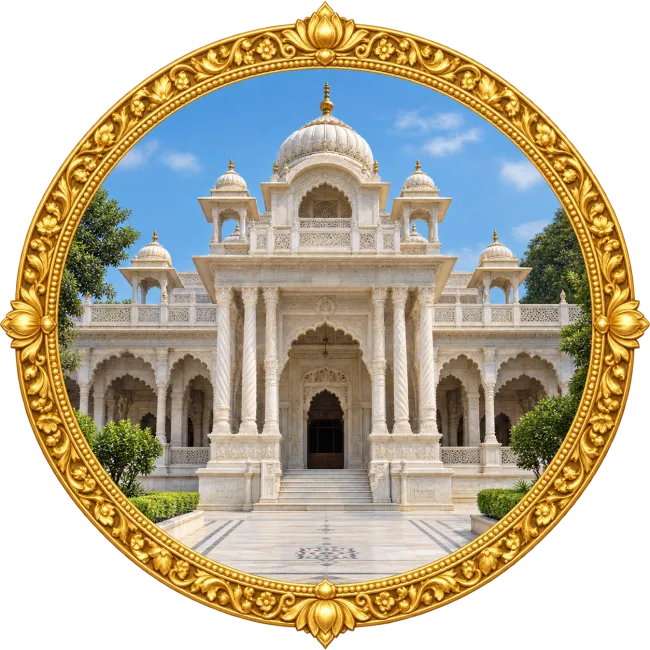
Shahji Temple Vrindavan
Visit Shahji Temple in Vrindavan—one of the city’s most distinctive temples dedicated to Radha and Krishna. Famous for its magnificent marble architecture, twelve spiral pillars, Belgian glass chandeliers, beautiful paintings, and the celebrated Basanti Kamra, the temple offers a remarkable combination of devotion, art, and 19th-century craftsmanship.
About Shahji Temple Vrindavan
Shahji Temple is a historic Radha-Krishna temple situated near Nidhivan in Vrindavan, Uttar Pradesh. The presiding deities are popularly known as Shri Chhote Radha Raman Ji.
Construction of the temple began in 1860 and was completed in 1868. It was built by two wealthy jeweller brothers from Lucknow, Shah Kundan Lal and Shah Phundan Lal. Their devotion to Radha and Krishna inspired them to create one of the most artistic temple buildings in Vrindavan.
The temple is renowned for its white marble construction, twelve twisted pillars, European-style decorations, Belgian glass chandeliers, painted ceilings, and the richly decorated Basanti Kamra.
Unlike the ancient red sandstone temples of Vrindavan, Shahji Temple displays a combination of Indian, Rajasthani, Mughal, Greek, and European architectural influences. Its unusual design makes it an important religious and heritage attraction.
History of Shahji Temple Vrindavan
Shah Kundan Lal and Shah Phundan Lal belonged to a prosperous jeweller family from Lucknow. Both brothers were devoted followers of Radha and Krishna and wished to build a grand temple in Vrindavan.
Construction began in 1860. Skilled architects, painters, stone carvers, sculptors, and craftsmen were employed to decorate the temple. The work continued for eight years, and the temple was completed in 1868.
The brothers installed Radha and Krishna as Shri Chhote Radha Raman Ji. The word “Chhote” distinguishes the deities from the self-manifested Radha Raman Ji worshipped at the historic Radha Raman Temple.
The Shah brothers also created the richly decorated Basanti Kamra, also called Rituraj Bhawan. This royal chamber was designed to celebrate spring and provide a magnificent ceremonial setting for the deities.
The temple continues to preserve the architectural vision and devotional traditions established by the Shah family.
Who Built Shahji Temple Vrindavan?
Shahji Temple was built by Shah Kundan Lal and Shah Phundan Lal, two jeweller brothers from Lucknow.
Religious Significance of Shahji Temple
Shahji Temple is dedicated to Radha and Krishna, who represent pure divine love and the eternal relationship between the soul and God.
Lord Krishna is worshipped here as Chhote Radha Raman. The name “Radha Raman” means the beloved of Radha Rani. Devotees believe that worshipping the divine couple develops love, compassion, devotion, and spiritual harmony.
Visitors pray at the temple for:
- Peace and harmony in relationships
- Happiness in married life
- Devotion towards Radha and Krishna
- Mental peace and emotional stability
- Family prosperity
- Protection from difficulties
- Spiritual knowledge
- Success in devotional practice
- Freedom from negative thoughts
- Blessings for a suitable life partner
The peaceful atmosphere of the temple allows devotees to sit, chant, and contemplate the divine beauty of Radha and Krishna.
Architecture of Shahji Temple Vrindavan
Shahji Temple is one of Vrindavan’s finest examples of 19th-century decorative temple architecture. It combines Indian temple traditions with European, Greek, Mughal, and Rajasthani artistic elements.
The temple is mainly constructed from white marble. Its tall spiral columns, arches, carvings, paintings, chandeliers, and ornamented interiors create the appearance of a royal palace.
Twelve Spiral Marble Pillars
The temple’s most recognisable architectural feature is a group of twelve spiral marble pillars. Each pillar is approximately 15 feet high and has a beautifully twisted design.
These pillars support the main hall and create an impressive visual effect. Their unusual form has made Shahji Temple famous among architecture enthusiasts.
Marble Construction
The extensive use of white marble gives the temple a bright and elegant appearance. Marble carvings can be seen on pillars, arches, platforms, railings, and decorative sections.
European Influence
The temple includes European-style arches, decorative patterns, chandeliers, and interior arrangements. The combination of Western design with traditional Krishna devotion gives the temple a distinctive identity.
Painted Ceilings and Walls
The ceilings and walls contain detailed paintings, floral patterns, devotional scenes, and decorative artwork. Many paintings are associated with Radha, Krishna, the Gopis, and the different seasons of Braj.
Main Prayer Hall
The spacious main hall contains the altar of Shri Chhote Radha Raman Ji. The twisted pillars, decorated ceiling, flower garlands, and marble surfaces create a royal devotional setting.
Basanti Kamra of Shahji Temple
The Basanti Kamra is the most famous section of Shahji Temple. It is also known as Rituraj Bhawan, meaning the palace of the king of seasons.
The room was designed to represent the joy, colours, flowers, and beauty of the spring season. Its walls and ceiling are decorated predominantly in shades associated with Basant.
Important features of the Basanti Kamra include:
- Belgian glass chandeliers
- Decorated ceilings
- Fine devotional paintings
- Floral patterns
- Coloured glasswork
- Mirrors and ornamental designs
- Royal furniture
- Decorative fountains
- Images associated with Radha and Krishna
- Traditional spring-themed decoration
The Basanti Kamra is not open for regular daily visits. It is opened for devotees on Basant Panchami and on selected special ceremonial days announced by the temple administration.
Large numbers of devotees visit Shahji Temple during Basant Panchami specifically to see this historic chamber.
Shahji Temple Vrindavan Timings
The temple follows separate summer and winter schedules.
Summer Timings
Winter Timings
Temple timings may be changed during Basant Panchami, Holi, Janmashtami, Jhulan Yatra, Phool Bangla, and other special celebrations.
Best Time for Darshan
The best time for regular darshan is between 8:30 AM and 10:30 AM. During this period, devotees can attend morning worship and observe the marble architecture in natural daylight.
Evening darshan is suitable for visitors who wish to attend Sandhya Aarti and experience the beautifully decorated temple with illuminated chandeliers and lamps.
October to March is the most comfortable period for visiting Vrindavan. Basant Panchami is particularly important because the Basanti Kamra is opened for special viewing.
Visitors interested primarily in the Basanti Kamra should check the temple’s festival-day arrangements before travelling.
Daily Puja and Rituals
The daily worship of Shri Chhote Radha Raman Ji follows traditional Radha-Krishna temple customs.
The principal daily rituals include:
- Mangala Aarti
- Morning Shringar
- Shringar Aarti
- Flower and Garland Seva
- Morning Bhog
- Raj Bhog Aarti
- Evening Puja
- Sandhya Aarti
- Bhajan and kirtan
- Shayan Aarti
The clothes, jewellery, flowers, and decorations of the deities change according to the season and festival.
Offerings and Prasad
Devotees can offer flowers, Tulsi leaves, fruits, sweets, clothes, and traditional Krishna Bhog.
Common offerings include:
- Tulsi leaves
- Flower garlands
- Fresh flowers
- Peda
- Makhan and mishri
- Laddu
- Fresh fruits
- Dry fruits
- Milk-based sweets
- Clothes for the deities
- Ornaments for Shringar
- Ghee lamps
- Incense and sandalwood
Offerings should be presented through the temple priests according to the established customs.
Festivals Celebrated at Shahji Temple
Basant Panchami
Basant Panchami is the most distinctive celebration associated with Shahji Temple. Shri Chhote Radha Raman Ji is dressed in yellow or Basanti clothes, and the temple is decorated with spring flowers.
The Basanti Kamra is opened for special viewing, attracting devotees and heritage enthusiasts from different places.
Krishna Janmashtami
Janmashtami celebrates the birth of Lord Krishna. Special Puja, Bhog, Shringar, bhajans, and festive darshan are organised.
Radhashtami
Radhashtami marks the appearance day of Radha Rani. The divine couple is dressed in beautiful clothes and decorated with flowers and ornaments.
Holi
Holi is celebrated with traditional Braj songs, flower decorations, colours, and special Radha-Krishna worship.
Jhulan Yatra
During Jhulan Yatra, Radha and Krishna are placed on a beautifully decorated swing. Devotees participate in bhajans and offer flowers.
Phool Bangla
During the summer, the deity altar is decorated with flowers to create a cooling and beautiful Phool Bangla. Elaborate floral patterns and garlands are used for the decoration.
Sharad Purnima
Sharad Purnima commemorates the divine Raas Lila of Radha and Krishna. Special white clothes, milk preparations, flower decorations, and evening worship are organised.
Other important celebrations include Govardhan Puja, Annakut, Kartik Purnima, Deepavali, Akshaya Tritiya, and Gaura Purnima.
Entry Fee and Visit Duration
There is no entry fee for regular darshan at Shahji Temple.
A standard visit takes 30–45 minutes. Visitors interested in observing the pillars, paintings, marble carvings, and architectural features may require 45–60 minutes.
Special arrangements or crowd-control rules may apply when the Basanti Kamra is opened.
How to Reach Shahji Temple Vrindavan
By Air
Indira Gandhi International Airport in Delhi is the most convenient major airport. Agra Airport is closer but has limited flight connectivity.
Taxis and buses are available from Delhi and Agra to Mathura and Vrindavan.
By Train
Mathura Junction is the nearest major railway station, located 12–14 kilometres from the temple. It is connected with Delhi, Agra, Jaipur, Mumbai, Kolkata, Lucknow, and Varanasi.
Visitors can hire a taxi, auto-rickshaw, or e-rickshaw from Mathura Junction to reach Vrindavan.
By Road
Vrindavan is well connected with Mathura, Delhi, Agra, Noida, Gurugram, and nearby cities. Travellers coming from Delhi can use the Yamuna Expressway.
Shahji Temple is situated near Nidhivan in the old temple area of Vrindavan. E-rickshaws and auto-rickshaws can reach the nearby lanes, but visitors may need to walk the final distance.
Nearby Places to Visit
Visitors can explore several important religious places near Shahji Temple:
- Nidhivan
- Seva Kunj
- Radha Raman Temple
- Radha Damodar Temple
- Banke Bihari Temple
- Govind Dev Ji Temple
- Gopeshwar Mahadev Temple
- Shri Ranganath Temple
- Gopinath Temple
- Madan Mohan Temple
- Keshi Ghat
- Vamshi Vat
- ISKCON Krishna Balaram Temple
- Prem Mandir
Visitor Guidelines
- Wear modest and respectful clothes inside the temple.
- Remove footwear before entering the worship area.
- Maintain silence during Puja, Bhog, and Aarti.
- Ask for permission before taking photographs or videos.
- Photography may be restricted inside the Basanti Kamra.
- Do not touch the chandeliers, paintings, pillars, or decorative objects.
- Avoid leaning against the historic marble pillars.
- Follow the queue and temple staff’s instructions on festival days.
- Keep phones, glasses, food, and bags protected from monkeys.
- Avoid carrying unnecessary valuables in the crowded lanes.
- Keep the temple premises clean.
- Check special opening arrangements before visiting the Basanti Kamra.
Conclusion
Shahji Temple Vrindavan is a remarkable combination of Radha-Krishna devotion, marble architecture, European decoration, and traditional Braj culture. Built by Shah Kundan Lal and Shah Phundan Lal between 1860 and 1868, the temple reflects the extraordinary artistic vision and devotion of its founders.
Its twelve twisted marble pillars, elegant prayer hall, Belgian glass chandeliers, detailed paintings, and magnificent Basanti Kamra distinguish it from every other temple in Vrindavan.
Whether visitors come for the blessings of Shri Chhote Radha Raman Ji, the special Basant Panchami celebration, or the temple’s architectural beauty, Shahji Temple offers a peaceful and memorable spiritual experience.