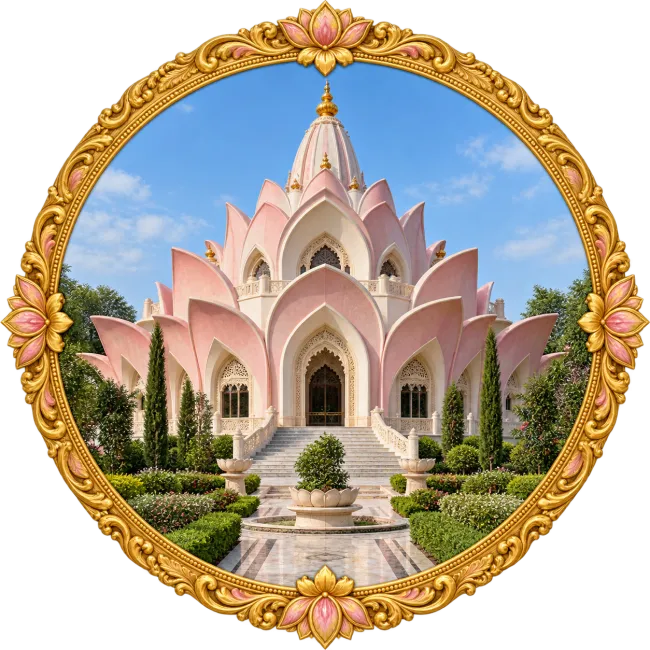
Priyakant Ju Temple Vrindavan
Visit Priyakant Ju Temple in Vrindavan, a magnificent lotus-shaped shrine dedicated to Shri Radha Krishna. Established by spiritual preacher Devkinandan Thakur Ji Maharaj, the temple is famous for its distinctive architecture, elevated sanctum, landscaped surroundings, colourful evening illumination, fountains, and peaceful devotional atmosphere.
About Priyakant Ju Temple Vrindavan
Priyakant Ju Temple, popularly called the Lotus Temple of Vrindavan, is located on Chhatikara Road near Shanti Seva Dham in Vrindavan, Uttar Pradesh. The temple is primarily dedicated to Shri Radha Krishna.
“Priyakant” is an affectionate name of Lord Krishna and refers to him as the beloved of Shri Radha Rani. The word “Ju” is a respectful expression commonly used in the Braj region.
The temple offers devotees a peaceful environment for prayer, darshan, meditation, bhajan, and participation in religious programmes. Its distinctive lotus-shaped structure and evening illumination also make it a popular attraction among families and tourists visiting Vrindavan.
History of Priyakant Ju Temple
Priyakant Ju Temple was established by Devkinandan Thakur Ji Maharaj under the guidance of Vishwa Shanti Seva Charitable Trust.
The temple project was initiated in 2009. It took approximately seven years to complete, and the temple was formally inaugurated on 8 February 2016.
It was created as a centre for Radha Krishna devotion, Bhagavata Katha, spiritual education, social service, and the preservation of Indian religious culture. Since its inauguration, the temple has become an important modern pilgrimage destination in Vrindavan.
Religious Significance of Priyakant Ju Temple
The principal deities of Priyakant Ju Temple are Shri Radha Krishna, representing eternal divine love, devotion, harmony, and complete surrender to God.
Devotees visit the temple to pray for:
- Love and harmony in relationships
- Peace and spiritual happiness
- Family unity and prosperity
- Protection from difficulties
- Success in education and career
- Blessings for marriage and children
- Freedom from stress and negative thoughts
- Devotion to Shri Radha Krishna
- Spiritual knowledge and divine grace
The temple encourages devotees to follow the path of Bhakti through prayer, kirtan, scripture listening, service, and remembrance of God.
Architecture of Priyakant Ju Temple
Priyakant Ju Temple is famous for its lotus-inspired architecture. The principal temple appears to rise from a large blooming lotus surrounded by water, fountains, and landscaped spaces.
The temple is approximately 125 feet high, 122 feet long, and 115 feet wide. Its elevated design makes the structure visible from a considerable distance.
The architectural features include:
- A lotus-shaped base
- Elevated main sanctum
- Grand stairways
- Decorative domes and spires
- Beautifully carved pillars
- Radha Krishna altar
- Landscaped gardens
- Water features and fountains
- Evening decorative lighting
- Spacious prayer and gathering areas
The lotus represents purity because it remains clean and beautiful despite growing in water and mud. Similarly, the temple encourages devotees to remain spiritually pure while living in the material world.
Main Deities at Priyakant Ju Temple
The main altar contains beautifully decorated deities of Shri Radha and Krishna. Their clothes, ornaments, flowers, and decorations are changed according to the season, festival, and temple calendar.
The divine forms represent:
- Eternal love
- Devotion and surrender
- Compassion and grace
- Harmony between the individual soul and God
- The spiritual sweetness of Braj
Devotees chant “Radhe Radhe,” sing Krishna bhajans, and offer flowers and prayers before the main altar.
Priyakant Ju Temple Timings
The temple schedule may change during Janmashtami, Radhashtami, Holi, Guru Purnima, Sharad Purnima, Diwali, and other major celebrations.
Fountain and Evening Light Experience
Priyakant Ju Temple becomes especially attractive after sunset when the lotus-shaped structure is illuminated with colourful lights. The reflections of the temple and decorative lights on the surrounding water create a beautiful visual experience.
The fountain and evening light experience generally begins after 7:00 PM. Its operation can be affected by weather conditions, maintenance, special religious programmes, or festival arrangements.
Visitors should arrive before sunset to see the temple in daylight and then enjoy the illuminated evening appearance.
Best Time for Darshan
The best time for a peaceful darshan is between 7:30 AM and 9:30 AM. Morning hours are generally less crowded and suitable for prayer, meditation, and photography of the exterior.
The best evening time is between 6:30 PM and 8:15 PM. Visitors can attend the evening aarti and experience the temple’s colourful illumination and fountains.
October to March is the most comfortable period for visiting Vrindavan because the weather is comparatively pleasant. Festivals offer a vibrant experience but attract larger crowds.
Entry Fee and Visit Duration
Entry to Priyakant Ju Temple is free.
A regular visit takes 45 minutes to one hour. Visitors who wish to attend the evening aarti, explore the grounds, and experience the decorative lighting and fountains should keep 1–2 hours available.
Additional charges may apply for privately organised religious services, professional photography, or special events.
Pujas and Devotional Activities
Regular religious activities at the temple may include:
- Morning Puja and Aarti
- Radha Krishna Shringar
- Bhog Seva
- Evening Aarti
- Shayan Aarti
- Radha Krishna Naam Sankirtan
- Bhajan and kirtan
- Bhagavata Katha
- Bhagavad Gita recitation
- Deepa Seva
- Festival Abhishekam
- Annadan Seva
- Special Sankalp Puja
The availability of individual pujas and sponsored sevas depends on the temple’s daily programme. Visitors should enquire at an authorised temple counter.
Offerings at Priyakant Ju Temple
Devotees may offer:
- Fresh flowers
- Flower garlands
- Tulsi leaves
- Fruits
- Makhan and mishri
- Sweets
- Dry fruits
- Traditional clothes
- Decorative ornaments
- Ghee lamps
- Bhog Seva
- Financial donations
- Annadan donations
Offerings should be submitted only through authorised temple representatives or designated counters.
Bhagavata Katha and Spiritual Programmes
Priyakant Ju Temple is closely associated with the religious teachings and Bhagavata Katha programmes of Devkinandan Thakur Ji Maharaj.
The temple may organise:
- Shrimad Bhagavata Katha
- Krishna Bhajans
- Radha Naam Sankirtan
- Bhagavad Gita discourses
- Spiritual camps
- Religious conferences
- Youth programmes
- Cultural activities
- Community-service initiatives
- Festival celebrations
Schedules for large religious programmes are announced separately.
Major Festivals Celebrated
Krishna Janmashtami
Janmashtami is celebrated with special decorations, Shringar, bhajans, kirtan, Abhishekam, and midnight worship. A large number of devotees visit the temple during the celebration.
Radhashtami
Radhashtami marks the divine appearance of Shri Radha Rani. Special prayers, flower decorations, bhajans, and Radha Krishna worship are organised.
Holi
Holi is celebrated according to the joyful devotional traditions of Braj. Flowers, natural colours, bhajans, and Radha Krishna worship create a festive atmosphere.
Guru Purnima
Devotees honour their spiritual teachers on Guru Purnima. Religious discourses, bhajans, puja, and charitable activities are organised.
Jhulan Yatra
During Jhulan Yatra, Shri Radha Krishna are worshipped on beautifully decorated swings. The temple is decorated with flowers and greenery.
Sharad Purnima
Sharad Purnima is associated with Shri Krishna’s Raas Leela. Special devotional singing, prayers, and decorations are organised.
Govardhan Puja
Govardhan Puja commemorates Lord Krishna lifting Govardhan Hill. Devotees offer food, prayers, and gratitude to Giriraj Maharaj.
Diwali
The temple is beautifully illuminated with lamps and decorative lights during Diwali. Devotees pray for peace, prosperity, and happiness.
How to Reach Priyakant Ju Temple
Priyakant Ju Temple is located near Shanti Seva Dham on Chhatikara–Vrindavan Road in Mathura district, Uttar Pradesh.
By Train
Mathura Junction is the nearest major railway station, located approximately 12–14 kilometres from the temple. It is connected with Delhi, Agra, Jaipur, Mumbai, Kolkata, Varanasi, and other major cities.
Visitors can take a taxi, auto-rickshaw, bus, or e-rickshaw from Mathura Junction.
By Road
Vrindavan is well connected with Mathura, Delhi, Noida, Gurugram, Agra, Jaipur, and nearby cities.
Visitors travelling from Delhi can use the Yamuna Expressway and exit towards Mathura or Vrindavan. The temple can be reached directly through Chhatikara Road.
By Bus
Government and private buses operate to Mathura and Vrindavan from Delhi, Agra, Jaipur, Aligarh, Bharatpur, and nearby towns.
Auto-rickshaws and e-rickshaws are available from the Mathura and Vrindavan bus stands.
By Air
Agra Airport is the nearest airport with limited flights. Indira Gandhi International Airport in Delhi is the nearest major international airport.
Visitors can travel from Delhi Airport to Vrindavan by taxi, bus, or train through Mathura.
Nearby Places to Visit
Visitors can explore several important destinations near Priyakant Ju Temple:
- Mata Vaishno Devi Dham
- Vrindavan Chandrodaya Temple
- Prem Mandir
- ISKCON Krishna Balaram Temple
- Banke Bihari Temple
- Nidhivan
- Seva Kunj
- Radha Raman Temple
- Radha Damodar Temple
- Madan Mohan Temple
- Keshi Ghat
- Yamuna Ghats
- Govardhan Hill
- Radha Kund
Visitor Facilities
The temple complex provides facilities such as:
- Free entry
- Drinking water
- Footwear deposit area
- Seating spaces
- Landscaped gardens
- Parking
- Security arrangements
- Prasad and donation counters
- Toilets
- Space for religious gatherings
- Access to food and refreshments nearby
Facilities and movement routes may change during major religious events.
Visitor Guidelines
- Wear modest and respectful clothing.
- Remove footwear before entering the temple.
- Cooperate with temple security.
- Keep mobile phones on silent mode.
- Maintain silence near the main altar.
- Follow photography and videography restrictions.
- Do not touch the deities or decorations.
- Keep children close near water and fountain areas.
- Do not throw coins, flowers, or waste into the water.
- Use only authorised donation counters.
- Keep the temple premises clean.
- Arrive early for evening aarti and illumination.
- Keep wallets, phones, and personal belongings secure.
- Follow designated entry and exit routes during festivals.
Conclusion
Priyakant Ju Temple is one of the most distinctive modern temples in Vrindavan. Established by Devkinandan Thakur Ji Maharaj and inaugurated on 8 February 2016, the temple is dedicated to Shri Radha Krishna and the message of divine love.
Its lotus-shaped architecture, elevated sanctum, beautiful deities, fountains, landscaped surroundings, evening illumination, and devotional programmes make it an important spiritual and cultural attraction.
A visit to Priyakant Ju Temple provides devotees with an opportunity to seek the blessings of Shri Radha Krishna while experiencing the beauty, peace, and devotional heritage of Vrindavan.