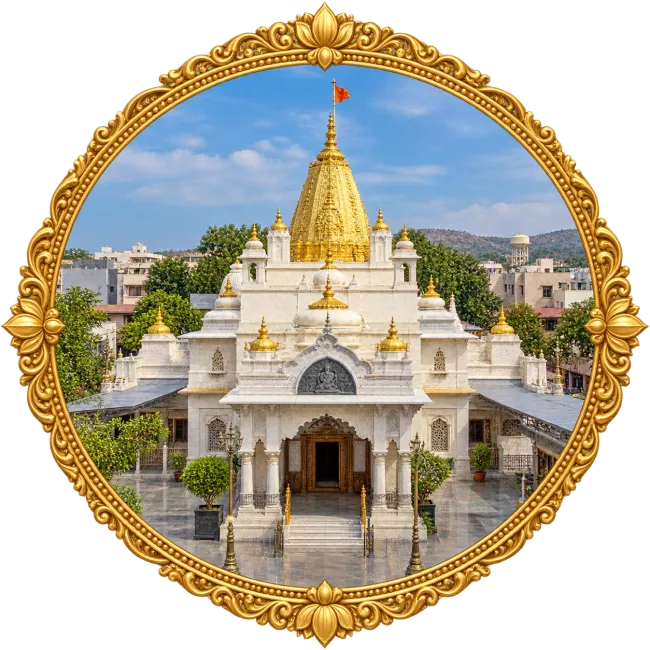
Shirdi Sai Baba Temple, Shirdi
Visit Shirdi Sai Baba Temple in Maharashtra—one of India’s most revered spiritual destinations and the sacred resting place of Shirdi Sai Baba. Known for Baba’s teachings of faith, patience, equality and service, the temple welcomes devotees from every religion and social background. The peaceful darshan, sacred aartis, Dwarkamai, Chavadi and ever-burning Dhuni make a visit to Shirdi a deeply spiritual experience.
About Shirdi Sai Baba Temple
Shirdi Sai Baba Temple, officially known as Shri Sai Baba Samadhi Mandir, is located in Shirdi in the Ahilyanagar district of Maharashtra. The temple contains the sacred Samadhi of Sai Baba, who lived in Shirdi for most of his known life and attained Mahasamadhi on 15 October 1918.
The Samadhi Mandir was constructed by Shrimant Gopalrao Bapusaheb Buti, a wealthy devotee from Nagpur. The building was originally known as Buti Wada.
The temple is presently administered by Shree Saibaba Sansthan Trust, Shirdi. The Trust also manages daily worship, darshan arrangements, accommodation, prasadalaya, hospitals, educational institutions and several charitable activities.
Sai Baba’s message, “Sabka Malik Ek,” meaning “God is One,” remains the central spiritual principle of the temple.
History of Shirdi Sai Baba Temple
Sai Baba first appeared in Shirdi as a young ascetic and was seen meditating under a neem tree. He later left the village and returned with the wedding procession of Chand Patil.
When the young fakir arrived near Khandoba Temple, the temple priest Mhalsapati welcomed him by saying, “Ya Sai.” From that moment, he came to be known as Sai Baba.
Sai Baba spent most of his life in a small mosque that he named Dwarkamai. He maintained a sacred fire known as the Dhuni, gave Udi to devotees, accepted food through bhiksha and helped people without discrimination based on caste, religion or wealth.
Baba attained Mahasamadhi on 15 October 1918, the day of Vijayadashami. His mortal remains were placed inside Buti Wada, which became the present Samadhi Mandir.
A large marble statue of Sai Baba was installed in the Samadhi Mandir on 7 October 1954. The statue was created by sculptor Balaji Vasant Talim and was consecrated by Swami Sai Sharananandji.
Who Built Shirdi Sai Baba Temple?
The Samadhi Mandir was built by Shrimant Gopalrao Bapusaheb Buti, a devoted follower of Sai Baba from Nagpur.
Bapusaheb Buti originally intended to build a stone Wada containing a temple. Construction began during Sai Baba’s lifetime and was carried out under Baba’s guidance.
After Sai Baba attained Mahasamadhi in 1918, his sacred body was placed in the central portion of the Wada. The building consequently became known as Sai Baba Samadhi Mandir.
Religious Significance of Shirdi Sai Baba Temple
Shirdi is considered a universal pilgrimage destination because Sai Baba welcomed followers of every religion. He taught people to recognise one divine power behind different names and forms of worship.
His principal teachings included:
- Shraddha, meaning faith
- Saburi, meaning patience
- Sabka Malik Ek, meaning God is One
- Service to the poor and hungry
- Compassion towards humans and animals
- Respect for every religion
- Charity and selfless living
- Surrender to God and the Guru
Devotees visit the temple to pray for peace, healing, family welfare, spiritual guidance and relief from difficulties.
Sai Baba’s Samadhi
Sai Baba’s sacred Samadhi is situated inside the main temple. It is constructed from white marble and is positioned directly in front of Baba’s seated statue.
The statue portrays Sai Baba seated on a throne with his right leg crossed over his left knee. His calm expression and raised hand represent protection, blessings and reassurance.
Devotees pass before the Samadhi during darshan and offer their prayers. The sanctum is decorated with flowers, garments and ornaments according to the daily and festival schedule.
Architecture of the Samadhi Mandir
The original building was designed as a stone Wada. After Sai Baba’s Mahasamadhi, it developed into the main shrine visited today.
Important architectural features include:
- Sai Baba’s white-marble statue
- Sacred marble Samadhi
- Ornamental throne
- Decorated sanctum
- Large assembly and darshan area
- Gold-plated elements inside the sanctum
- Spacious queue complex
- Separate entry arrangements for different darshan categories
- Areas for daily aarti and religious ceremonies
The temple has undergone several renovations to accommodate the large number of pilgrims while preserving the sacred Samadhi and historic character of the shrine.
Shirdi Sai Baba Temple Timings
The official daily programme is:
The Dhoop Aarti follows the daily sunset time, so its exact clock time changes during the year. Temple timings can also be modified during Ram Navami, Guru Purnima, Vijayadashami and other important occasions.
Shirdi Sai Baba Aarti Timings
Four principal aartis are performed daily:
Kakad Aarti
Kakad Aarti is the first major aarti of the day. It begins at 05:15 AM and symbolically awakens Sai Baba. Devotees sing traditional Marathi aartis in the peaceful early-morning atmosphere.
Madhyan Aarti
Madhyan Aarti is performed at 12:00 PM. It is the principal noon worship and is attended by a large number of devotees.
Dhoop Aarti
Dhoop Aarti is performed at sunset. Since sunset changes with the season, visitors should check the day’s exact time before joining the queue.
Shej Aarti
Shej Aarti is performed at 10:00 PM. It is the final aarti of the day, after which Sai Baba is ceremonially prepared for rest.
Best Darshan Time
The best period for general morning darshan is from 06:25 AM to 09:00 AM. Devotees who wish to attend Kakad Aarti must make the required arrangements and reach the temple before 05:15 AM.
The period between 02:00 PM and 04:00 PM can be suitable for darshan on regular weekdays.
Thursdays, weekends, public holidays and festival days receive larger crowds. Visitors seeking a peaceful darshan should choose a weekday other than Thursday.
Aarti and Darshan Booking
General darshan is free. Devotees may also use authorised online services for paid darshan, aarti participation, puja and accommodation booking.
Aarti capacity is limited, and advance booking may be required for:
- Kakad Aarti
- Madhyan Aarti
- Dhoop Aarti
- Shej Aarti
- Paid darshan
- Sai Satyavrata Puja
- Accommodation
Devotees should use only authorised booking channels and avoid agents or unofficial websites. A valid photo identity document may be required for verification.
Daily Puja and Rituals
The temple’s daily worship programme includes:
- Bhupali
- Kakad Aarti
- Mangal Snan
- Morning decoration
- General darshan
- Dhuni Puja
- Madhyan Aarti
- Pothi reading
- Dhoop Aarti
- Devotional singing
- Cultural programmes
- Shej Aarti
The ceremonial dress and decoration of Sai Baba’s statue may change according to the day, festival and season.
Sai Satyavrata Puja
Sai Satyavrata Puja is conducted in the designated hall behind the Shani Temple. Registration can be completed in advance according to the temple’s booking process.
Sacred Places Inside the Temple Complex
Dwarkamai
Dwarkamai is the old mosque where Sai Baba lived for many years. Baba named it Dwarkamai and welcomed people from every religion.
The sacred Dhuni lit by Sai Baba continues to burn here. Ash from the Dhuni is distributed as Udi.
Important objects associated with Baba can also be seen inside Dwarkamai, including the stone on which he sat.
Chavadi
Sai Baba slept in the Chavadi on alternate nights during the later years of his life. The building preserves objects and photographs associated with him.
The Chavadi procession tradition remembers the ceremonial journey in which devotees accompanied Baba from Dwarkamai to Chavadi.
Gurusthan
Gurusthan is located beneath the neem tree where Sai Baba was first seen meditating as a young ascetic.
Devotees regard it as a sacred place connected with Baba’s Guru and early spiritual life in Shirdi.
Lendi Baug
Lendi Baug is a garden where Sai Baba spent time in meditation. The Nanda Deep, a continuously burning lamp, is maintained here.
Khandoba Temple
Khandoba Temple is associated with Sai Baba’s return to Shirdi. It was here that Mhalsapati welcomed him with the words “Ya Sai,” giving him the name by which he became known worldwide.
Dixit Wada Museum
Dixit Wada Museum preserves several personal belongings of Sai Baba, including utensils, clothing, footwear, a grinding stone and other historical objects.
Significance of Udi
Udi is the sacred ash obtained from the continuously burning Dhuni in Dwarkamai. Sai Baba distributed Udi to devotees as a blessing.
Spiritually, Udi reminds devotees that the physical body and material possessions are temporary. It encourages detachment, faith and remembrance of God.
Udi is distributed to devotees through authorised arrangements within the temple complex. It should be received respectfully and should never be purchased from unauthorised sellers.
Offerings at Shirdi Sai Baba Temple
Devotees commonly offer:
- Flowers and garlands
- Donations
- Food donation
- Annadan Seva
- Clothing sponsorship for Baba
- Gold or silver ornaments
- Prasad
- Participation in puja
- Service to the poor
- Contributions to hospitals and educational activities
Permitted offerings can change because of security and temple-management decisions. Visitors should check the current notice before carrying flowers, garlands, shawls, food or other items into the temple.
Donations should be made only at authorised counters, and devotees should always collect an official receipt.
Prasad at Shirdi Sai Baba Temple
Udi and Bundi Laddoo are among the best-known forms of prasad associated with Shirdi.
Authorised prasad counters sell sealed packets of laddoos. Devotees should avoid buying prasad from unauthorised agents claiming to represent the temple.
Shri Sai Prasadalaya also serves sattvik meals to pilgrims. The meal generally includes dal, chapati, rice, vegetables and a sweet dish.
Shri Sai Prasadalaya
Shri Sai Prasadalaya is a large solar-powered dining facility managed by the temple Trust. It was established in 2009 to continue Sai Baba’s tradition of feeding the hungry.
The Prasadalaya contains large dining halls and can serve thousands of devotees. Free sattvik meals are provided as Sai Prasad.
Special arrangements are made during festivals when the number of visitors increases significantly.
Major Festivals Celebrated at Shirdi
Ram Navami
Ram Navami is one of the principal festivals celebrated in Shirdi. The tradition began during Sai Baba’s lifetime and became a symbol of harmony between different religious communities.
The celebration includes special aarti, palkhi procession, devotional singing and continuous religious programmes.
Guru Purnima
Guru Purnima honours Sai Baba as the spiritual Guru. Devotees offer prayers, read Sai Satcharitra and participate in special aartis and processions.
Vijayadashami and Sai Baba Punyatithi
Sai Baba attained Mahasamadhi on Vijayadashami, 15 October 1918. The day is observed as Sai Baba Punyatithi.
Special worship, processions, devotional programmes and charitable activities are organised during the festival.
Thursday Palkhi Procession
Thursday is considered especially sacred for Sai Baba’s devotees. A traditional palkhi procession is organised according to the temple schedule.
Diwali
The temple is decorated with lamps and flowers during Diwali. Special aartis and devotional programmes are conducted.
Holi and Rang Panchami
Holi and Rang Panchami are celebrated with devotion, cultural programmes and traditional rituals.
Best Time to Visit Shirdi
Shirdi can be visited throughout the year. The most comfortable period is from October to March.
Visitors wishing to experience major celebrations can travel during Ram Navami, Guru Purnima or Vijayadashami. However, these festivals attract very large crowds and require advance planning.
Summer temperatures can be high, while the monsoon season may bring heavy rain. Morning and evening visits are more comfortable during summer.
Recommended Visit Duration
A regular visit to the Samadhi Mandir and nearby sacred places requires 3 to 5 hours, depending on the darshan queue.
Visitors wishing to attend an aarti, explore Dwarkamai, Chavadi, Gurusthan, Lendi Baug and the museum should reserve a full day.
A two-day trip is more suitable during weekends and festivals.
Entry Fee and Darshan Pass
General darshan at Shirdi Sai Baba Temple is free.
Separate charges may apply to:
- Paid darshan
- Aarti booking
- Sai Satyavrata Puja
- Special religious services
- Accommodation
- Prasad packets
- Clothing sponsorship
Prices and availability can change. Payments should be made only through authorised booking services or official counters.
Dress Code
The temple does not prescribe an elaborate compulsory dress code, but devotees should wear clean, modest and respectful clothing.
Traditional Indian attire or comfortable formal clothing is suitable. Shorts, sleeveless outfits and revealing clothes should be avoided.
Visitors may need to remove footwear before entering specific sacred areas.
Security and Photography Rules
Security screening is compulsory before entering the main temple.
Important guidelines include:
- Mobile phones and cameras may be restricted inside the Samadhi Mandir.
- Photography is not permitted inside the main sanctum.
- Large bags should be deposited at authorised counters.
- Sharp objects, tobacco, alcohol and inflammable materials are prohibited.
- Keep a valid photo identity document.
- Follow separate queues and security instructions.
- Do not carry unauthorised prasad or offerings.
- Do not hand money to agents or unauthorised persons.
- Keep children and elderly family members together in crowded areas.
Locker and deposit facilities are available near the temple for restricted belongings.
Facilities Available for Devotees
The temple Trust provides several facilities:
- Free general darshan
- Paid darshan booking
- Aarti booking
- Prasadalaya
- Bundi Laddoo Prasad counters
- Udi distribution
- Accommodation facilities
- Drinking water
- Toilets
- Cloakrooms and lockers
- Shoe-storage counters
- Medical assistance
- Hospitals
- Wheelchair assistance
- Queue halls
- Help desks
- Free parking facility
- Transport service from designated parking areas
- Lost-and-found support
- Security and police assistance
- Donation counters
- Religious bookstalls
Facilities may be modified during festivals and special security arrangements.
Accommodation in Shirdi
Shree Saibaba Sansthan Trust operates accommodation facilities for pilgrims. These include rooms, halls and dormitories at different locations.
Popular Trust-managed accommodation complexes include:
- Sai Ashram
- Dwarawati Bhakti Niwas
- New Bhakta Niwas
Advance booking is recommended for Thursdays, weekends, public holidays and major festivals.
Visitors should avoid fake accommodation listings and make reservations only through authorised services.
How to Reach Shirdi Sai Baba Temple
By Air
Shirdi International Airport is the nearest airport, located approximately 14 kilometres from the temple.
Flights connect Shirdi with selected major cities. Taxis and buses are available from the airport.
Chhatrapati Sambhajinagar Airport, Pune Airport and Nashik Airport can also be used depending on flight availability.
By Train
Sainagar Shirdi Railway Station is the nearest railway station, situated approximately 3 kilometres from the temple.
The station has direct and connecting trains to Mumbai, Pune, Chennai, Delhi, Hyderabad and other cities.
Other useful railway stations include:
Auto-rickshaws, taxis and buses are available from these stations.
By Road
Shirdi is well connected by road with Nashik, Pune, Mumbai, Ahilyanagar, Chhatrapati Sambhajinagar and nearby cities.
State transport buses, private buses, taxis and personal vehicles operate regularly to Shirdi.
Nearby Places to Visit
Shani Shingnapur
Shani Shingnapur is a famous temple dedicated to Lord Shani. It is one of the most popular religious destinations visited with Shirdi.
Sakori
Sakori is associated with Upasani Maharaj, a prominent spiritual figure who received guidance from Sai Baba.
Nashik and Panchavati
Nashik is known for Panchavati, Ramkund, Kalaram Temple, Sita Gufa and several places connected with the Ramayana.
Trimbakeshwar Temple
Trimbakeshwar is one of the twelve Jyotirlingas and is situated near Nashik.
Muktidham Temple
Muktidham is a white-marble temple complex near Nashik Road Railway Station. The walls contain the eighteen chapters of the Bhagavad Gita.
Ellora Caves
The Ellora Caves near Chhatrapati Sambhajinagar contain Hindu, Buddhist and Jain rock-cut monuments, including the magnificent Kailasa Temple.
Important Tips for Visitors
- General darshan is free.
- The temple opens at 04:45 AM.
- Kakad Aarti begins at 05:15 AM.
- General darshan starts at 06:25 AM.
- Dhoop Aarti is performed at sunset.
- Shej Aarti begins at 10:00 PM.
- Book aarti and accommodation in advance.
- Carry a valid photo identity document.
- Use only authorised booking and donation services.
- Collect an official receipt for every donation.
- Avoid agents offering guaranteed or shortcut darshan.
- Deposit restricted electronic devices and bags at authorised counters.
- Wear modest and comfortable clothing.
- Thursdays and weekends receive larger crowds.
- Keep extra time during Ram Navami, Guru Purnima and Vijayadashami.
- Check current restrictions before carrying flowers, garlands or other offerings.
- Receive Udi and purchase prasad only from authorised counters.
- Senior citizens should request wheelchair or assistance facilities when required.
- Use designated parking areas and temple transport services.
Conclusion
Shirdi Sai Baba Temple is more than a pilgrimage destination; it is a universal centre of faith, patience, compassion and religious harmony. Built by Bapusaheb Buti and established as Sai Baba’s Samadhi Mandir in 1918, the shrine preserves the sacred presence and teachings of one of India’s most beloved saints.
The Samadhi Mandir, Dwarkamai, Chavadi, Gurusthan, Lendi Baug, sacred Dhuni and daily aartis allow devotees to experience the important places connected with Sai Baba’s life. A visit to Shirdi inspires people to follow Baba’s timeless message of “Shraddha and Saburi” and remember that “Sabka Malik Ek.”