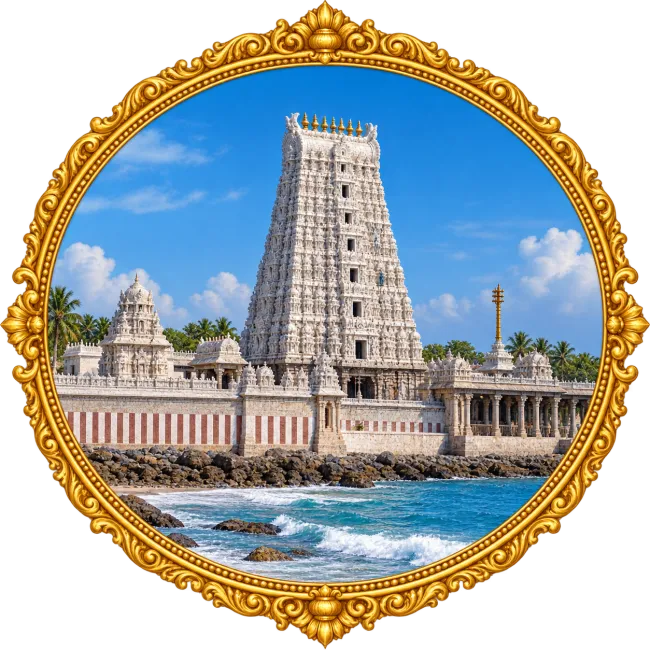
Tiruchendur Murugan Temple, Tamil Nadu
Visit Tiruchendur Murugan Temple, also known as Arulmigu Subramaniya Swamy Temple, one of the six sacred abodes of Lord Murugan. Located on the seashore in the Thoothukudi district of Tamil Nadu, the temple is famous for its connection with Lord Murugan’s victory over the demon Surapadman, beautiful coastal setting, ancient rituals, sacred sea bath and grand Kanda Sashti celebrations.
About Tiruchendur Murugan Temple
Tiruchendur Murugan Temple is one of the most important temples dedicated to Lord Murugan. It is situated beside the Bay of Bengal and is the only one among the six Arupadai Veedu temples located near the seashore.
The presiding deity is Lord Subramaniya Swamy, also worshipped as Senthil Andavar, Shanmugan and Murugan. The temple is regarded as the sacred place where Lord Murugan defeated the demon Surapadman.
Devotees visit the temple to seek courage, wisdom, victory, protection and relief from difficulties. Many pilgrims take a holy dip in the sea at the nearby Tiruchendur seashore before entering the temple.
The temple follows traditional Tamil worship practices and remains active throughout the year with daily pujas, processions, abhishekams and festivals.
History of Tiruchendur Murugan Temple
Tiruchendur is an ancient pilgrimage centre with references in Tamil devotional literature and traditions connected with Lord Murugan.
The exact year of the temple’s original construction is not available in a single historical record. The shrine developed gradually through the contributions of different rulers, devotees and religious institutions.
The Pandya and Chera rulers are traditionally associated with the early development and improvement of the temple. Later, the Nayak rulers and other patrons supported the construction of mandapams, towers, corridors and other temple structures.
During the 17th century, the temple faced a difficult period when it was occupied by the Dutch East India Company. The temple idols were taken away during this period and were later recovered and brought back through the efforts of devotees and local administrators.
Temple renovation and construction activities continued over the following centuries. Desikamurti Swami of the Tiruvavaduthurai Mutt also played an important role in the development and maintenance of the temple.
The temple is currently administered by the Hindu Religious and Charitable Endowments Department of the Government of Tamil Nadu.
Legend of Tiruchendur Murugan Temple
According to Hindu mythology, the demon king Surapadman performed severe penance and received powerful blessings. With his growing strength, he began troubling the gods, sages and devotees.
The gods prayed to Lord Shiva for protection. Lord Murugan was created from the divine energy of Lord Shiva and was appointed as the commander of the celestial forces.
Lord Murugan travelled to Tiruchendur with his army and stayed there before beginning the battle against Surapadman. A fierce battle took place between Murugan and the demon.
With the help of his divine Vel, Lord Murugan defeated Surapadman. When the demon realised the power of the Lord, he surrendered. Lord Murugan transformed one part of Surapadman into a peacock, which became his vehicle, and the other part into a rooster, which became the symbol on his flag.
The victory of Lord Murugan over Surapadman is celebrated every year during the Kanda Sashti festival through the famous Soorasamharam ceremony.
Legend of the Temple’s Location
Another tradition states that after defeating Surapadman, Lord Murugan wished to worship Lord Shiva. The divine architect Mayan is believed to have constructed a shrine at Tiruchendur for this purpose.
The location near the ocean is considered sacred because the sea is believed to have witnessed the Lord’s victory and divine worship.
Religious Significance of Tiruchendur Temple
Tiruchendur is one of the six sacred abodes of Lord Murugan, known as Arupadai Veedu. The six abodes represent important stages and events in the life of Lord Murugan.
Tiruchendur is especially associated with victory over evil and the protection of devotees.
People visit the temple to pray for:
- Courage and confidence
- Victory over difficulties
- Success in education
- Career growth
- Protection from negative forces
- Good health
- Family welfare
- Fulfilment of vows
- Relief from fear and anxiety
- Spiritual strength and wisdom
The temple is also an important place for Kavadi, milk-pot offerings, abhishekam and sea-bath rituals.
Main Deity of Tiruchendur Temple
The main deity is Lord Subramaniya Swamy, also known as Senthil Andavar. The deity is worshipped in a divine standing form and is associated with Lord Murugan’s victorious and protective aspect.
Lord Murugan holds the Vel, the sacred spear representing wisdom, courage and the destruction of ignorance. The Vel is also considered a symbol of divine protection.
The processional deity is worshipped during temple festivals and daily processions. Devotees receive blessings from Lord Murugan through various alankarams, abhishekams and special pujas.
Important Shrines Inside the Temple
Lord Shanmugan
Lord Shanmugan is worshipped as the six-faced form of Lord Murugan. The six faces represent divine knowledge, power and protection in all directions.
Goddess Valli
Goddess Valli is one of the consorts of Lord Murugan. Devotees pray to her for love, family happiness and harmony.
Goddess Deivanai
Goddess Deivanai is the second consort of Lord Murugan. She represents divine grace, discipline and prosperity.
Lord Shiva
Lord Shiva is worshipped in the temple through a sacred shrine connected with Lord Murugan’s worship after the victory over Surapadman.
Valli Cave
The Valli Cave is located near the temple and is connected with the legend of Goddess Valli. It is an important place visited by pilgrims.
Nazhi Kinaru
Nazhi Kinaru is a sacred freshwater well situated close to the seashore. It is traditionally believed to have been created by Lord Murugan’s Vel.
The freshwater of Nazhi Kinaru is considered sacred, even though the sea is located nearby.
Architecture of Tiruchendur Murugan Temple
Tiruchendur Murugan Temple displays traditional Tamil temple architecture combined with features shaped by its coastal location.
Rajagopuram
The temple’s tall entrance tower is one of its most important landmarks. The gopuram is decorated with sculptures and images connected with Lord Murugan and Hindu mythology.
Coastal Location
Unlike most of the other Arupadai Veedu temples, Tiruchendur Temple is located directly beside the sea. The sound of the waves and the temple rituals create a unique spiritual atmosphere.
Mandapams
The temple contains several mandapams used for daily worship, processions, religious ceremonies and festival activities.
Sculptures and Carvings
The pillars and walls feature carvings of deities, guardians, divine beings and scenes from Murugan’s legends.
Temple Corridors
The temple corridors connect the main shrine with other important sanctums, mandapams and ritual areas.
Tiruchendur Murugan Temple Timings
The temple opens early in the morning and remains open until night. The daily schedule includes several pujas and short ritual interruptions.
During Kanda Sashti, Soorasamharam, Brahmotsavam, Vaikasi Visakam and other important festivals, temple timings and darshan arrangements may change.
Daily Puja and Aarti Timings
The exact ritual sequence can be modified during festival days and special temple ceremonies.
Morning and Evening Aarti
The morning worship begins with Subrahmanya Suprabhatam and Viswaroopa Darshan. Devotees can experience the early morning devotional atmosphere between 5:10 AM and 6:15 AM.
The evening aarti is performed as part of Sayaraksha Puja from 5:00 PM to 5:15 PM. The final night worship takes place during Palliyarai Puja from 8:45 PM to 9:00 PM.
Devotees should reach the temple before the scheduled puja because entry may be controlled during the ritual.
Holy Sea Bath and Nazhi Kinaru
Many devotees begin their pilgrimage with a holy dip in the sea near the temple. This sea area is known as the sacred Tiruchendur Theertham.
After the sea bath, devotees traditionally visit Nazhi Kinaru, the freshwater well located close to the seashore. The water is considered sacred and is used by pilgrims as part of the temple visit.
Visitors should follow safety instructions while bathing in the sea. During strong waves, monsoon weather or festival crowds, pilgrims should use only the areas permitted by the authorities.
Religious Practices at Tiruchendur Temple
Devotees participate in several religious activities, including:
- Abhishekam
- Milk-pot offering
- Kavadi offering
- Archana
- Vel offering
- Ghee lamp offering
- Sea bath
- Nazhi Kinaru ritual
- Tonsure
- Special darshan
- Vastram offering
- Procession worship
- Prayer at Valli Cave
Kavadi and milk offerings are especially popular during Kanda Sashti, Thaipusam and Vaikasi Visakam.
Offerings at Tiruchendur Temple
Devotees commonly offer:
- Milk
- Flowers
- Fruits
- Coconut
- Sandalwood paste
- Ghee lamps
- Kavadi
- Milk pots
- Vastram
- Vel replicas
- Panchamirtham
- Monetary donations
- Special abhishekam materials
Offerings should be made only through authorised temple counters and designated areas.
Prasad at Tiruchendur Temple
Devotees may receive sacred ash, kumkum and other blessed offerings after darshan.
Popular prasadam items include:
- Panchamirtham
- Vibhuti
- Kumkum
- Sweet pongal
- Puliyodarai
- Laddu
- Vada
- Milk-based prasadam
- Abhishekam prasadam
Prasadam availability may differ according to the day and festival schedule.
Major Festivals Celebrated
Kanda Sashti
Kanda Sashti is the most important festival at Tiruchendur. It is observed for six days with fasting, special pujas, processions and devotional programmes.
The sixth day is celebrated as Soorasamharam, which represents Lord Murugan’s victory over Surapadman. The ceremony attracts thousands of devotees.
Vaikasi Visakam
Vaikasi Visakam celebrates the birth of Lord Murugan. Special abhishekams, decorations, processions and religious ceremonies are performed.
Masi Festival
The Masi festival is a major annual celebration that includes processions, special worship and ceremonial events.
Aavani Festival
Aavani Perunthirunal is celebrated with special rituals and processions dedicated to Lord Murugan.
Brahmotsavam
Brahmotsavam includes several days of temple ceremonies, alankarams and processions of the processional deity.
Thaipusam
Thaipusam is celebrated with Kavadi, milk-pot offerings, devotional processions and special prayers.
Panguni Uthiram
Panguni Uthiram is associated with divine marriage traditions and is celebrated with special worship for Lord Murugan, Goddess Valli and Goddess Deivanai.
Other important occasions include Skanda Sashti, Karthigai Deepam, Tamil New Year, monthly Karthigai and monthly Sashti.
Best Time to Visit Tiruchendur Temple
The best season to visit Tiruchendur is from October to March, when the weather is comparatively pleasant.
Early morning is suitable for devotees who wish to attend Suprabhatam, Viswaroopa Darshan and the first morning worship.
Evening is suitable for visitors who wish to experience the coastal atmosphere and Sayaraksha Puja.
The temple receives its largest crowds during:
- Kanda Sashti
- Soorasamharam
- Thaipusam
- Vaikasi Visakam
- Panguni Uthiram
- Masi Festival
- Weekends
- Public holidays
Recommended Visit Duration
Visitors should keep additional time for queues, sea-bath arrangements, prasadam collection and local travel.
Entry Fee and Special Darshan
General entry to the temple is free. Separate charges may apply for:
- Special darshan
- Abhishekam
- Archana
- Milk offering
- Kavadi services
- Special pujas
- Tonsure
- Prasadam
- Break darshan
- Other temple services
Ticket prices and availability may change according to the temple administration.
Dress Code
Devotees should wear clean, modest and respectful clothing.
Recommended clothing includes:
- Dhoti or veshti for men
- Kurta-pyjama
- Saree for women
- Salwar kameez
- Traditional Indian clothing
- Comfortable clothes for sea bathing
Visitors should carry an additional set of clothes if they plan to take a sea bath or participate in abhishekam.
Photography and Security
Photography may be restricted inside the sanctum and important ritual areas. Visitors should follow the instructions of temple staff.
Mobile phones, cameras, large bags and electronic items may not be permitted inside certain parts of the temple. Restricted belongings should be deposited at authorised counters.
Devotees should not carry:
- Alcohol
- Tobacco products
- Non-vegetarian food
- Sharp objects
- Large bags
- Unauthorised cameras
- Prohibited electronic devices
Visitors should be careful near the seashore and follow warnings issued during high waves or difficult weather.
How to Reach Tiruchendur Murugan Temple
By Air
Tuticorin Airport is the nearest airport. Madurai International Airport is another option for travellers coming from distant cities.
Taxis and buses are available from the airports to Tiruchendur.
By Train
Tiruchendur Railway Station is the nearest railway station. It is connected with Tirunelveli, Madurai and other important towns in Tamil Nadu.
Auto-rickshaws, taxis and local transport are available from the railway station to the temple.
By Road
Tiruchendur is well connected by road with Thoothukudi, Tirunelveli, Madurai, Nagercoil and other cities in Tamil Nadu.
Government and private buses operate regularly to Tiruchendur. The temple is located close to the town centre and can be reached easily from the bus stand.
Nearby Places to Visit
Nazhi Kinaru
Nazhi Kinaru is the sacred freshwater well located close to the seashore. It is an important part of the traditional pilgrimage.
Tiruchendur Beach
The beach beside the temple is visited by pilgrims for the sacred sea bath and by visitors seeking a peaceful coastal experience.
Valli Cave
Valli Cave is associated with Goddess Valli and is located near the temple complex.
Manapad
Manapad is a coastal village known for its beach, historic sites and peaceful surroundings.
Kulasekarapattinam
Kulasekarapattinam is known for the Mutharamman Temple and its famous Dasara festival.
Thoothukudi
Thoothukudi is a coastal city known for its port, beaches and historic attractions.
Tirunelveli
Tirunelveli is a major nearby city with several temples, markets and cultural landmarks.
Facilities Available
Facilities available for pilgrims include:
- Darshan counters
- Puja booking counters
- Prasadam counters
- Tonsure centres
- Drinking water
- Public toilets
- Changing rooms
- Cloakrooms
- Footwear counters
- Annadanam facilities
- Medical assistance
- Resting areas
- Hotels and guest houses
- Auto-rickshaws and taxis
- Shops selling puja materials
Festival days may bring heavy crowds and long queues at all facilities.
Important Tips for Devotees
- Reach early if you wish to attend Suprabhatam or Viswaroopa Darshan.
- Carry an additional set of clothes for the sea bath.
- Follow all safety instructions near the seashore.
- Use only authorised counters for puja, tickets and prasadam.
- Keep children under supervision near the water.
- Avoid carrying valuables and large bags.
- Deposit mobile phones and cameras where required.
- Wear modest and comfortable clothing.
- Keep sufficient time for queues during festivals.
- Do not approach unauthorised agents for special darshan.
- Maintain silence and follow the queue system.
- Avoid touching sculptures and sacred objects.
- Confirm festival-day timings before planning the visit.
- Preserve the cleanliness of the beach and temple surroundings.
Conclusion
Tiruchendur Murugan Temple is one of the most sacred and spiritually powerful temples dedicated to Lord Murugan. Its association with the victory over Surapadman, coastal location, ancient traditions, sacred Nazhi Kinaru and grand Kanda Sashti celebrations make it unique among the Arupadai Veedu temples.
A visit to Tiruchendur offers devotees an opportunity to experience sea worship, traditional pujas, Kavadi devotion, sacred rituals and the divine blessings of Lord Senthil Andavar. With proper planning and respect for temple customs, the pilgrimage can become a deeply meaningful spiritual experience.