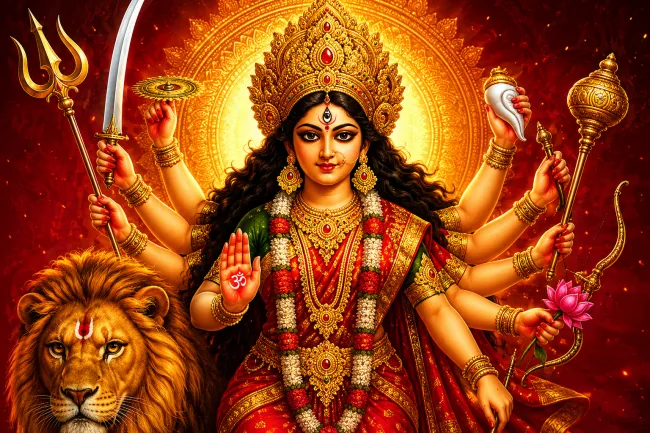
Nav Durga Stotra
Nav Durga Stotra is a sacred devotional hymn dedicated to the Navadurga, the nine divine manifestations of Goddess Durga worshipped during the auspicious festival of Navratri. The stotra glorifies these nine forms of the Divine Mother, each representing a unique aspect of divine power, spiritual growth, protection, wisdom, and compassion. Through its verses, devotees honor the Goddess and seek her blessings for strength, prosperity, success, and spiritual enlightenment.
The nine forms of Goddess Durga worshipped in the Nav Durga Stotra are:
- Shailaputri – The daughter of the mountains, symbolizing purity, strength, and the beginning of the spiritual journey.
- Brahmacharini – The embodiment of devotion, penance, self-discipline, and spiritual determination.
- Chandraghanta – The symbol of courage, peace, and protection from negative forces.
- Kushmanda – The cosmic creator who is believed to have brought the universe into existence through her divine energy.
- Skandamata – The loving mother of Lord Kartikeya, representing maternal care, wisdom, and protection.
- Katyayani – The fierce warrior goddess who destroys evil and grants courage and determination.
- Kalaratri – The remover of darkness, fear, and ignorance, symbolizing divine protection and transformation.
- Mahagauri – The embodiment of purity, peace, forgiveness, and spiritual purification.
- Siddhidatri – The bestower of spiritual powers, wisdom, perfection, and divine blessings.
The Nav Durga Stotra praises these nine manifestations and highlights their divine qualities. Each form represents a stage of spiritual evolution and teaches important virtues such as faith, courage, self-discipline, wisdom, compassion, purity, and devotion. By contemplating these forms, devotees are inspired to cultivate these qualities within themselves.
A central theme of the stotra is the Divine Mother's role as the protector of the universe and the destroyer of evil. The hymn celebrates Goddess Durga's power to remove obstacles, dispel fear, protect devotees from harm, and guide them toward righteousness. It reminds devotees that the Divine Mother is always present to support and uplift those who seek her refuge with sincerity and devotion.
The recitation of Nav Durga Stotra is especially popular during Navratri, when each of the nine forms is worshipped on a specific day of the festival. Devotees chant the stotra, offer prayers, perform aarti, observe fasting, and engage in spiritual practices to honor the Goddess and seek her blessings. The hymn is also recited throughout the year by those wishing to strengthen their devotion and maintain a connection with the Divine Mother.
Spiritually, the Nav Durga Stotra encourages self-transformation and inner growth. The nine forms of the Goddess symbolize the journey from ignorance to wisdom, from weakness to strength, and from worldly attachment to spiritual realization. Through devotion and contemplation of these divine manifestations, devotees strive to overcome negative tendencies and awaken their highest potential.
Devotees believe that regular recitation of the Nav Durga Stotra brings peace, protection, prosperity, courage, good health, success, and spiritual advancement. It is regarded as a powerful prayer for invoking the grace of Goddess Durga and receiving her guidance in all aspects of life.
Overall, Nav Durga Stotra is a beautiful and inspiring hymn that celebrates the nine divine forms of Goddess Durga and their profound spiritual significance. It serves as a source of devotion, strength, and wisdom, helping devotees deepen their connection with the Divine Mother and progress on the path of spiritual fulfillment. Through its sacred verses, the stotra reminds worshippers of the Goddess's boundless power, compassion, and protective grace.